What Makes Unity’s Termite Treatment Different — Termidor and Trelona Deep Dive
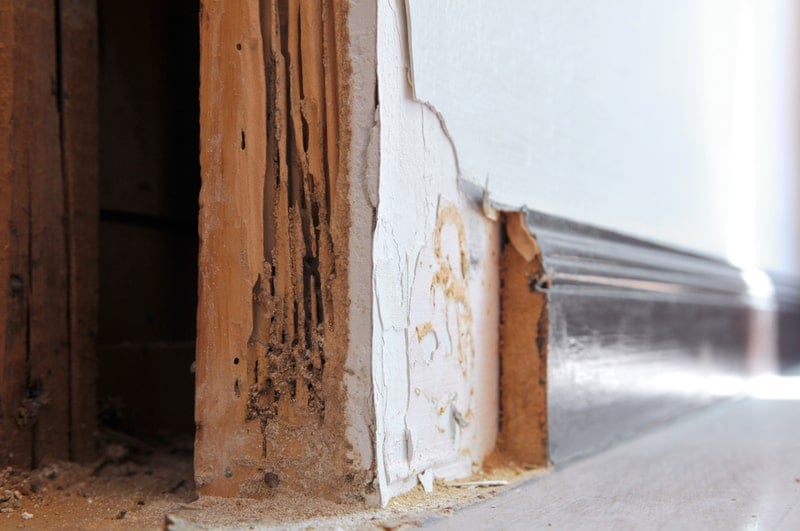

Termite work is where a licensed pro’s decision-making — not just the product itself — makes the biggest difference in whether termites actually stop. Two homes on the same street in Nocatee can need completely different treatment approaches based on soil conditions, foundation type, landscaping, and species involved. Here’s how Unity actually chooses between Termidor liquid barrier and Trelona baiting, and why the renewable bond that comes with every treatment is the piece that protects you long-term.
Why Product Choice Matters (Subterranean vs. Drywood)
Two termite categories drive nearly every treatment decision in North Florida:
Subterranean termites — Eastern Subterranean, Formosan. Colonies live in the soil, forage up into structural wood through mud tubes. Colony sizes: 60,000 to 2 million individuals. This is 80%+ of what we treat in St. Johns and Flagler.
Drywood termites — Western Drywood, Southeastern Drywood. Colonies live inside structural wood without soil contact. Colony sizes: a few hundred to a few thousand. Common in older St. Augustine historic downtown homes and barrel-tile roofs.
These require entirely different treatment approaches. Getting the ID wrong means treating the wrong colony type — a very expensive mistake.
Termidor Liquid Barrier — How It Works, Where It Wins
Termidor is a non-repellent liquid termiticide (active ingredient: fipronil) injected into the soil around the foundation perimeter. The termite doesn’t detect it, walks through the treated zone, picks up the active ingredient, and carries it back to the colony where it spreads by contact through grooming behavior. Colony collapses over weeks.
Where Termidor wins:
- Active subterranean infestations (currently feeding on your home)
- Slab-on-grade construction where perimeter injection is straightforward
- Preventive treatment before construction (pre-construction Termidor)
- Long-term effectiveness — 10+ years is well-documented
Where Termidor is harder:
- Heavily landscaped perimeters where injection would damage plantings
- Properties with well water very close to the treated zone (regulatory setbacks)
- Slabs with significant obstacles (deck footings, HVAC pads) that require additional drilling
Typical cost: $800–$2,800 for a full-perimeter treatment on a single-family home.
Trelona Baiting — How It Works, Where It Wins
Trelona is an in-ground baiting system with monitored stations installed around the foundation perimeter. Termites find the stations, feed, and take the bait (novaluron) back to the colony. Novaluron prevents termites from molting — colony can’t reproduce, colony collapses over weeks to months.
Where Trelona wins:
- Properties where soil treatment is impractical (deep landscaping, well proximity, heavy irrigation)
- HOA-managed properties that require monitored, low-impact treatment
- Homes with young families where perimeter chemistry exposure is a concern
- Ongoing monitoring — stations report activity, so we know if new colonies attempt to establish
Where Trelona is harder:
- Active infestations that need fast knock-down (bait works slower than liquid barrier)
- Homes without room around the perimeter for proper station spacing
Typical cost: $1,400–$3,200 first year (station installation + monitoring), $175–$325/year after that for continued monitoring.
How We Choose Between the Two on Your Property
The decision comes down to about six factors:
- Active vs. preventive. Active infestations usually get Termidor for faster knock-down. Preventive treatment (no current activity, want protection) can be either.
- Foundation type and access. Slab-on-grade with clear perimeter access = easy Termidor install. Heavy landscaping or difficult access can push toward Trelona.
- Well distance. If your well is within regulatory setback of the foundation, Termidor may need modification or Trelona becomes preferred.
- HOA and family concerns. Some HOAs specify baiting only. Some families prefer minimum-exposure approaches for kids and pets.
- Long-term plan. Selling in 2 years? Termidor is a one-and-done. Staying 20+ years? Either works, both include renewable bonds.
- Species involved. Formosan colonies (2 million individuals) get aggressive Termidor. Native subterraneans (500K individuals) are more forgiving on treatment choice.
Neither product is universally “better.” Both work when matched to the right property.
The Renewable Bond That Comes With Every Treatment
Every Unity termite treatment includes a renewable annual bond. Here’s what that actually means:
- Annual inspection. We come out once per year to inspect for new activity. Free as part of the bond.
- Re-treatment coverage. If termite activity is detected during the bond period, re-treatment is covered under the bond — no additional charge.
- Damage coverage on select bonds. Some bonds include damage repair up to a stated cap. We disclose which tier applies on your specific bond upfront.
Bond renewal cost: $175–$325/year depending on home size. That’s the smallest “insurance premium” you’ll ever pay on a home structure — homeowners insurance doesn’t cover termite damage, so this bond is the closest thing to termite insurance you can get.
Why Owner-Operator Service Matters for Termite Work
Termite treatment is high-consequence work. Get the placement wrong on Termidor and you have gaps in your barrier. Get the station count wrong on Trelona and foragers walk around your unprotected zones. Get the species ID wrong and you treat the wrong colony type entirely.
Brandon does every termite inspection personally. Every treatment plan is his call, not a call-center technician’s script. That accountability is the reason our termite work carries real bonds — because we know it was done right the first time.
The math on termite work: Same-week treatment at first warning sign = $800–$2,800 with bond. Year-two structural repair after untreated activity = $12,000–$25,000 plus treatment. Same-week response is the cheapest decision you’ll make as a homeowner.
Suspect termites or want a bond? Book a free termite inspection.
Free termite inspection across St. Johns and Flagler Counties. Same-week appointments. Written report. Brandon does the inspection himself and gives honest advice — including “you don’t need treatment yet” when that’s the truth.
See Termite Control Services →Read next: Early Warning Signs of Termites in Your Home. Or dig into the full termite control guide.
Frequently Asked Questions
Which is better — Termidor or Trelona?
Neither is universally better. Both are highly effective when matched to the right property. Termidor is faster and often cheaper up-front; Trelona provides ongoing monitoring and works where liquid treatment isn’t practical.
What if I already had a treatment years ago?
Termidor effectiveness lasts 10+ years but declines over time. If your last treatment was more than 8 years ago and you don’t have an active bond, a re-inspection is a good idea.
Is the bond transferable if I sell?
Yes — most modern bonds are transferable to new owners at no cost. It’s a real selling point for a home. Ask specifically at signing.
Can I combine Termidor and Trelona?
Rarely necessary. If both are indicated, we usually stage them (Termidor knock-down first, Trelona monitoring after). Most properties only need one.
Brandon Micalizzi is the licensed owner-operator of Unity Pest & Wildlife, based in St. Augustine, FL. He’s been serving St. Johns and Flagler Counties since 2023 as an owner-operator, with nearly a decade in the industry (since 2017). If you need help with termite treatment or a bond, book a free termite inspection or call (386) 597-3955.
