DIY Termite Treatments Compared — Orange Oil, Foam, and Bait Kits Reviewed
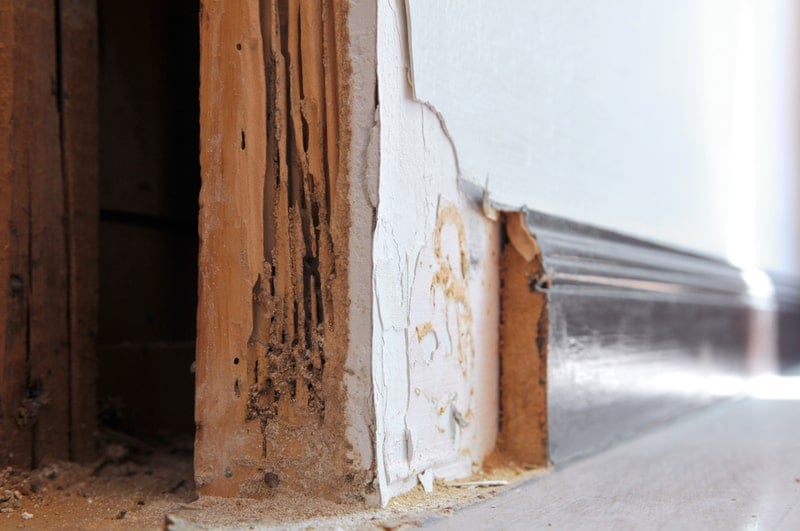

Termites are the one pest category where DIY has a very narrow window of usefulness. On a small localized drywood colony you can reach with a foam applicator, targeted DIY buys you time. On anything subterranean — meaning most termite activity in North Florida — DIY is theater. Here’s the head-to-head on the consumer termite products actually worth understanding.
Orange Oil / D-Limonene (Spot Treatment Only)
Orange oil is a citrus-derived compound (d-limonene) that kills termites on direct contact. Marketed as an “eco-friendly” or “natural” termite treatment. Available at Home Depot and specialty pest suppliers.
How it works: injected into small drilled holes in the wood where you’ve identified drywood termite activity (kick-out holes, frass piles). The oil kills termites it contacts and has some short-term residual in the treated wood.
Where it works: a very small, isolated drywood colony in a specific accessible piece of wood — one baseboard section, one window frame, one furniture piece.
Where it fails: anything larger than a very small localized colony, and any subterranean termite activity. Orange oil doesn’t spread beyond the immediate treated area — colonies simply move to untreated wood.
Termiticide Foam Applicators
Expanding foam formulations of common termiticides (fipronil, cypermethrin, or bifenthrin). Available on Amazon in $20–$60 aerosol cans. Injected into wall voids or drilled holes where activity is identified.
How it works: foam expands to fill the void, contacts termites, and kills them via active ingredient. Some residual effect in the treated void.
Where it works: a specific accessible wall cavity with confirmed drywood or dampwood activity, and only when you’ve identified the entry hole. Works alongside orange oil for spot-treatment on isolated drywood colonies.
Where it fails: subterranean termites (they’re not in the wall — they’re feeding through the wall from a colony in the ground), and any activity you can’t precisely locate.
DIY Bait Station Kits — the Consumer Version of Trelona
Spectracide Terminate, Advance Termite Bait System (consumer version), and similar kits at Lowes and Home Depot. Ship with 4–6 monitoring stations that you install in the ground around the foundation.
How it works: stations contain wood or bait matrix. Termite foragers find the station, feed, and take the bait back to the colony.
Where it works: if you install enough stations, monitor them consistently, and understand the biology of colony collapse (weeks to months). And if you get lucky with placement intercepting active foraging paths.
Where it fails: coverage. A professional Trelona install uses 10–20 stations spaced 10–20 feet apart around the entire foundation perimeter. Consumer kits ship with a fraction of that. Termites forage around under-covered zones.
Perimeter Sprays That Claim “Termite” Coverage — the Truth
Several consumer perimeter sprays (Ortho Home Defense variants, some Bayer products) mention “termites” on the label. They’re technically effective against termite foragers that walk through the treated barrier — but they don’t reach the colony, don’t stop the foraging pipeline for long, and don’t survive the 4+ inches of rain we get in a typical Florida summer month.
Why Every DIY Option Has the Same Structural Limitation
Termite treatment that actually works requires one of two things:
- A continuous liquid barrier around the entire foundation, applied at label rate to a specific depth and volume. That’s Termidor. It requires professional injector equipment, sometimes drilling through slab, and hundreds of gallons of applied product on a typical home.
- A monitored bait system with enough stations spaced correctly to intercept foragers on all sides of the foundation. That’s Trelona. Consumer kits ship with a fraction of the stations you actually need.
Both are pro-grade products in pro-grade quantities. There’s no consumer version that meaningfully replicates either.
When Even Perfect DIY Application Isn’t Enough
Call a pro when:
- You see a mud tube (subterranean activity — always pro)
- You see swarmer wings on windowsills (mature colony has released reproductives — pro)
- You see frass in multiple locations (drywood infestation is spread, not spot)
- You see blistering paint or hollow-sounding wood at baseboards (advanced activity)
- You’re preparing a home for sale — DIY doesn’t produce a report a buyer’s inspector will accept
Bottom line on termite DIY: for a single confirmed drywood spot in one accessible piece of wood, targeted foam + orange oil is a reasonable stop-gap. Everything else — every mud tube, every swarm, every subterranean-suspicion sighting — is a pro job from day one.
Suspect termites? Book a free termite inspection.
Free termite inspection across St. Johns and Flagler Counties. Same-week appointments. Written report. Brandon does the inspection himself and gives honest advice.
See Termite Control Services →Read next: What Makes Unity’s Termite Treatment Different — Termidor vs. Trelona. Or the full termite control guide.
Frequently Asked Questions
Is orange oil really effective on drywood termites?
Yes — for a very small, isolated, accessible colony. It’s a spot treatment, not a whole-house solution. If you have drywood activity in more than one location, spot treatment won’t keep up.
Can consumer bait kits eliminate a subterranean colony?
Sometimes, if you get lucky with placement and install enough stations. Almost always they under-cover the property, and foragers keep feeding on your house through the untreated zones.
Do “termite-labeled” perimeter sprays work?
Marginally, and only briefly. Rain washes them off, they don’t reach the colony, and they don’t produce a lasting barrier. Not a real termite treatment.
What’s the fastest DIY response to a mud tube?
Don’t spray it. Don’t break it. Photograph it and call a pro that day. Breaking a mud tube alerts the colony to reroute and makes future professional treatment harder to plan.
Brandon Micalizzi is the licensed owner-operator of Unity Pest & Wildlife, based in St. Augustine, FL. He’s been serving St. Johns and Flagler Counties since 2023 as an owner-operator, with nearly a decade in the industry (since 2017). If you need help with termite activity, book a free termite inspection or call (386) 597-3955.
