How to Handle Termites — DIY Options and When You Absolutely Need a Pro

DIY termite treatment is one of the few areas of pest control where the honest answer is “don’t.” Most homeowners who try DIY termite work end up with a false sense of security, more damage than they started with, and a bigger bill when they finally call a pro. That said — there ARE limited situations where DIY has a place. This is the honest breakdown.
The Uncomfortable Truth — DIY Termite Treatment Rarely Solves It
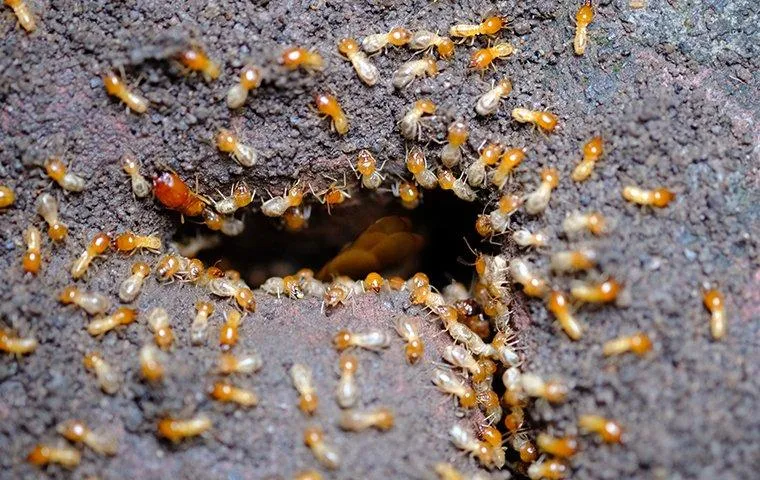
Termite colonies are the reason DIY fails. A mature Eastern subterranean colony has 60,000–1,000,000 individuals. A Formosan colony can hit 2 million. Consumer termite products are designed to kill visible termites in a limited area — not to reach a colony that’s underground, inside walls, or spread across your entire foundation footprint.
The result: a homeowner sees a mud tube, sprays it, watches the termites in that tube die, and thinks the problem is solved. What actually happened is the colony detected the disturbance and rerouted through a different foraging path. Six months later there’s damage in a new area of the house.
This is the pattern I see every year on real estate closings — a seller “treated” it themselves years ago, the buyer’s inspection catches active termites, and everyone realizes the DIY spray was theater.
DIY Options That Might Delay the Problem
Orange Oil / D-Limonene Spot Treatment
Orange oil kills drywood termites on direct contact. Effective for a small, isolated drywood colony in a specific piece of wood you can access — one baseboard section, one window frame, one trim piece. Available at Home Depot.
Where it fails: anything larger than a very small localized colony. Orange oil has almost no residual effect and doesn’t reach termites inside a wall void.
Termiticide Foam Applicators
Expanding termiticide foam ($30–$60 for a can) injected into wall voids can kill drywood termites in a specific accessible location. Amazon carries several brands. Best for one wall cavity where you’ve identified activity through frass or a kick-out hole.
Where it fails: subterranean termites (they’re not in the wall — they’re feeding through the wall from a colony in the ground) and any activity you can’t precisely locate.
Bait Station Kits (Spectracide, Advance)
Consumer-grade bait station kits ($40–$120 at Lowes) mimic the professional Trelona system at a smaller scale. Effective if you install enough stations, monitor them consistently, and understand the biology.
Where it fails: coverage. A professional Trelona install uses 10–20 stations spaced correctly around the entire foundation perimeter. Consumer kits typically ship with 4–6 stations, which leaves half the foundation unmonitored. Termites forage around your under-covered zones.
Nematodes for Subterranean Control
Beneficial nematodes are microscopic organisms marketed as an organic termite treatment. Research on their real-world effectiveness is mixed at best. Some studies show short-term reduction in soil-based termite activity; most show inconsistent results in humid Southern climates.
Verdict: worth trying if you’re committed to a pesticide-free approach and you’re pairing it with monitoring. Not a substitute for chemical treatment on an active infestation.
DIY That Actually Makes It Worse
- Spraying visible mud tubes. Kills the visible termites, alerts the colony, causes rerouting. Damage continues elsewhere.
- Perimeter sprays that claim “termite” coverage. Most consumer perimeter sprays are ineffective against subterranean termites and mislead homeowners into believing they’re protected.
- Skipping the inspection and treating “just in case.” Wastes money and time. If you don’t have termites, you don’t need treatment. If you do, DIY is unlikely to solve it.
Why Subterranean Termites Are Always a Pro Job
Subterranean termite colonies live in the soil around and under your home. They forage up into structural wood through mud tubes. To actually eliminate a subterranean colony, you need one of two things:
- A continuous liquid soil barrier around the entire foundation, installed at label rate to a specific depth and volume. That’s Termidor and it requires professional equipment (an injector, a rig, sometimes drilling through slab).
- A properly-installed bait system with enough stations spaced correctly to intercept foragers on all sides of the foundation. That’s Trelona, and consumer kits ship with a fraction of the stations needed for full coverage.
Neither of these is a DIY project. The equipment cost alone rules out DIY, and the product-quality difference between professional Termidor and consumer termiticides is significant.
Cost Comparison — DIY vs. Termidor vs. Trelona
- DIY (orange oil + foam + consumer bait kit): $200–$400 up front. Success rate on subterranean termites: near zero. Success rate on very small drywood infestations: variable.
- Unity Termidor liquid barrier: $800–$2,800 for a typical single-family home. Full perimeter treatment. 10+ year effectiveness. Includes renewable bond.
- Unity Trelona baiting: $1,400–$3,200 first year. $175–$325/year monitoring after that. Ideal for properties where soil treatment isn’t practical.
- Localized drywood spot treatment: $450–$1,200. When you have a small, contained drywood infestation and don’t need whole-home fumigation.
The bottom line on termite DIY: if you see drywood frass in one very specific location, targeted DIY foam might buy you time. Everything else — mud tubes, swarmers, any subterranean activity — is a pro job from day one. Every week you delay, damage compounds.
Suspect termites? Book a free termite inspection.
Free termite inspection across St. Johns and Flagler Counties. Same-week appointments. Written report. Brandon does the inspection himself and gives honest advice — including “you don’t need treatment yet, but you should watch this spot” when that’s the truth.
See Termite Control Services →Read next: DIY Termite Treatments Compared — Orange Oil, Foam, and Bait Kits Reviewed. Or dig into the full termite control guide for species detail, warning signs, and treatment options.
Frequently Asked Questions
Is any DIY termite product actually effective?
Yes — for narrowly-scoped drywood problems. Orange oil and termiticide foam on a specific accessible piece of wood can kill a localized drywood colony. Nothing consumer-grade works on subterranean termites.
Can I skip a bond if I just do treatment?
You can, but the bond is what protects you long-term. Without a renewable bond, re-treatment (if activity returns) is out of pocket. The annual bond cost ($175–$325) is small insurance against future colonies.
How do I know if I have subterranean or drywood termites?
Mud tubes = subterranean. Frass (small pellet piles that look like sawdust or coffee grounds) = drywood. Both = possible, and treatment approach depends on which one you’re dealing with. A free inspection settles it in an hour.
How urgent is treatment if I see one mud tube?
Same week. One visible mud tube almost always means a colony has been active for six months or more. The visible tube is often just one of several. Waiting a month while you research options is a month of continued damage.
Brandon Micalizzi is the licensed owner-operator of Unity Pest & Wildlife, based in St. Augustine, FL. He’s been serving St. Johns and Flagler Counties since 2023 as an owner-operator, with nearly a decade in the industry (since 2017). If you’re dealing with termite warning signs, book a free termite inspection or call (386) 597-3955.
