What Happens When Termites Go Untreated — The Real Damage Timeline for St. Augustine Homes
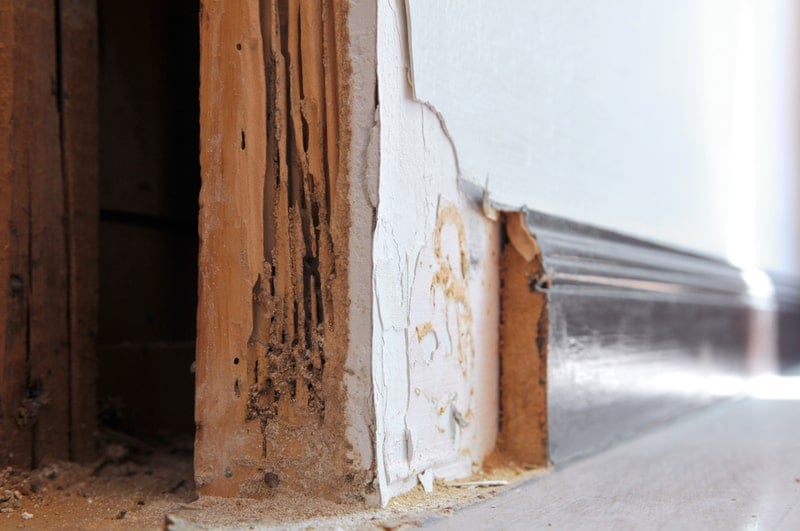

Termites do their most expensive work invisibly. The wall looks fine. The floor feels solid. The paint doesn’t blister until months after the damage is well underway. That silent phase is the reason a $1,200 treatment turns into an $18,000 structural repair.
This is the timeline of what termites actually do to a St. Augustine, Palm Coast, or St. Johns County home if you don’t treat them — and the money math on why same-week response is the cheapest decision you’ll make as a homeowner.
Months 1–3 — Silent Foraging Inside Structural Wood
An established subterranean colony sends out foragers year-round in North Florida. They locate a structure, build a mud tube up the foundation, and start feeding on the sill plates and structural framing. The first three months of colony activity leave zero visible signs from the outside. The mud tube might be behind landscaping. The tunnels are inside the wood. The colony is quietly mapping the food source.
Drywood termites work differently but reach the same result. They swarm from a mature colony, land on your fascia or window frames, and establish new colonies inside solid wood. Those colonies feed inward from the surface, leaving a thin skin of intact wood behind.
Cost to fix if caught this early: $800–$2,800 for Termidor liquid barrier treatment on a typical single-family home. Fastest path back to normal. Includes renewable bond.
Months 6–12 — Visible Signs Start Appearing
Around month six is when a homeowner might notice the first sign — usually one of these:
- A mud tube on the foundation or garage wall
- Small piles of what looks like sawdust or coffee grounds (drywood frass) near windows or trim
- Discarded swarmer wings on windowsills after a warm rain
- Blistering or bubbling paint that doesn’t correspond to a water source
Most homeowners see one of these and assume it’s minor. That’s the trap. By the time these signs are visible, colonies have been active for six to twelve months and are established well beyond the visible symptoms.
Cost to fix at this stage: $1,400–$3,800. Treatment (Termidor or Trelona) plus early-stage repair of visibly damaged wood — one baseboard section, one sill plate, one window frame.
Year 2–3 — Structural Damage Compounds Fast
By year two, the damage is structural. Sagging floors. Doors and windows that stick because the framing has shifted. Drywall that’s soft to the touch. In a raised-slab home, load-bearing floor joists get eaten from below where a homeowner can’t see. In a slab-on-grade home in Nocatee or WGV, sill plates and interior partition walls take the damage.
The couple I mentioned in the main termite guide — the ones who stepped through their porch floor — hit this stage. Two years of unchecked subterranean activity on a downtown St. Augustine coquina-block home. Total repair: $18,000. That’s not a fringe outlier. That’s the middle of the distribution.
If it’s a Formosan colony instead of native subterraneans, compress this whole timeline into months. Formosan colonies (millions of workers) can cause serious structural damage in six months. We see two to three confirmed Formosan jobs per year in Northeast Florida and the trend is up.
Repair math by stage: Same-week treatment = $800–$2,800. Year-one repair + treatment = $3,500–$8,000. Year-two structural repair + treatment + bond = $12,000–$40,000. Year-three catastrophic = $40,000+ with subfloor and joist replacement.
The Insurance Gap — Why You Pay for All of It
Every homeowner I talk to assumes insurance covers termite damage. It never does. Read your policy — you’ll find “damage caused by insects, vermin, or rodents” in the exclusions section. The reasoning insurers use: termite damage is preventable through routine maintenance, so they treat it as maintenance, not a covered peril.
Which means every dollar of repair — the drywall, the framing, the flooring — comes from your pocket. This is why bonds exist. A renewable termite bond ($175–$325/year for a typical home) contractually covers re-treatment and, on some bonds, some damage repair up to a stated cap. It’s the closest thing to termite insurance you can actually get.
What a Typical St. Augustine Repair Costs at Each Stage
- Same week — visible warning signs, no damage yet: $800–$2,800. Termidor liquid barrier or Trelona baiting. Bond included. Done.
- Year 1 — early damage in one area: $3,500–$7,500. Treatment plus targeted wood repair (one baseboard run, one window frame, one section of trim).
- Year 2 — multi-area structural damage: $12,000–$25,000. Treatment plus significant framing repair, drywall replacement, and cosmetic finish work.
- Year 3+ — catastrophic: $30,000–$60,000+. Subfloor replacement, joist sistering or replacement, potentially foundation work, full interior refinish in affected areas.
Why Formosans Compress This Timeline Into Months
Native Eastern subterranean colonies top out around 500,000 to 1,000,000 workers. Formosan colonies can hit 2 million. That’s not marginal difference — it’s 3× to 4× more mouths feeding on the same structure. A house that would take a native colony three years to seriously damage can take a Formosan colony less than a year.
North Florida has Formosans, and they’re spreading. If you see a large termite swarm in June or July (native subs swarm in March-April, Formosans swarm later), get an inspection that same week. Not “when you have time.” That week.
Suspect termites? Book a free termite inspection this week.
Free termite inspection across St. Johns and Flagler Counties. Same-week appointments. Written report. Brandon does the inspection himself and gives honest advice — including “you don’t need treatment yet, but you should watch this spot” when that’s the truth.
See Termite Control Services →Read next: How to Handle Termites — DIY Options and When You Absolutely Need a Pro. Or dig into the full termite control guide for species detail, warning signs, and treatment options.
Frequently Asked Questions
Will my homeowners insurance cover any termite repair?
Almost never. Damage caused by insects, vermin, or rodents is a standard exclusion in Florida residential policies. The exception: some carriers cover fire damage that resulted from termite-caused wiring exposure, but not the termite remediation itself.
How fast can Formosans really damage a home?
Serious structural damage in six months is documented on active Formosan colonies. Native Eastern subterraneans typically take 18–36 months to reach the same stage.
If I already see damage, is it too late for treatment to matter?
No. Treatment stops the ongoing feeding — which is the most important thing. Existing damage still needs repair, but treatment prevents that repair from getting worse and prevents new areas from being damaged.
Does treatment come with a warranty?
Every Unity termite treatment includes a renewable annual bond. The bond covers re-treatment if activity returns within the bond period, contingent on the annual inspection being current.
Brandon Micalizzi is the licensed owner-operator of Unity Pest & Wildlife, based in St. Augustine, FL. He’s been serving St. Johns and Flagler Counties since 2023 as an owner-operator, with nearly a decade in the industry (since 2017). If you’re seeing signs of termite activity, book a free termite inspection or call (386) 597-3955.
