What Makes Unity’s Quarterly Pest Program Different — Integrated Pest Management Explained

The old model of pest control — someone shows up, sprays your baseboards, leaves an invoice — doesn’t work well against the pests we actually deal with in North Florida. It over-treats what doesn’t need treatment, breeds product resistance, and misses the structural issues that let pests keep coming back. Here’s what Unity does differently, and why our quarterly clients see fewer pests year over year rather than the same pests every visit.
What Integrated Pest Management (IPM) Actually Means
IPM is a fancy term for a simple idea: figure out what pests you actually have, understand what’s inviting them in, and target treatment to the specific problem. It’s the opposite of “spray everything and hope.”
In practice, IPM on a residential pest program means:
- Correct identification first. No treatment happens until we know what pest we’re dealing with. Ghost ants and fire ants get treated differently, and treating one as if it were the other wastes your money and time.
- Structural + habitat modification. Sealing gaps around plumbing penetrations, correcting moisture issues, trimming vegetation away from the foundation — these are often more effective than any product.
- Targeted application. Perimeter for palmetto bugs. Gel bait for German roaches. Broadcast for fire ants. The right product in the right place.
- Monitoring, not just spraying. Every quarterly visit includes a perimeter walkthrough — I’m looking for new activity, new entry points, new conditions. That’s what we act on.
Perimeter First — Why Interior Spraying Is a Last Resort
The exterior granular perimeter treatment is the highest-value single application on a residential pest program. Done right, it stops the pipeline of new pests coming inside from outside — which is where 90% of North Florida pest pressure originates.
Interior spraying is reserved for German roaches (which live inside), ants that have established interior colonies, and specific spot treatments. It’s not a routine “spray the baseboards every visit” action — that approach over-exposes your family and pets to chemistry that doesn’t need to be there, and breeds resistance in the colonies you’re actually trying to control.
Product Rotation — Why We Don’t Use the Same Thing All Year
Pests develop resistance to any single active ingredient over time. This is basic biology — the individuals that survive treatment breed a next generation that survives treatment better. Homeowners who apply the same Ortho perimeter spray every month for two years often end up with a pest population that shrugs off the product entirely.
Our quarterly program rotates through different chemistry classes across the year — pyrethroids in one quarter, neonicotinoids in another, IGRs (insect growth regulators) as needed. This keeps the population from adapting and keeps treatment effectiveness stable long-term.
Structural Exclusion — the Part Most Big Companies Skip
The single most valuable thing on the quarterly perimeter walkthrough is the exclusion notes. I’m looking for:
- Unsealed gaps around plumbing penetrations (a #1 palmetto bug entry point)
- Damaged door sweeps and weather stripping
- Weep holes in brick facades that need mesh
- Torn window screens
- Gaps at utility line entries (cable, gas, electrical)
- Vegetation touching the foundation (highway for ants)
Sealing these one at a time across a quarter is more valuable than any product. Big pest companies rarely do this — their per-visit time is too short and their techs aren’t trained to inspect for it. It’s one of the reasons big-company customers often see the same pests every visit.
Owner-Operator Service — Same Diagnosis, Same Person
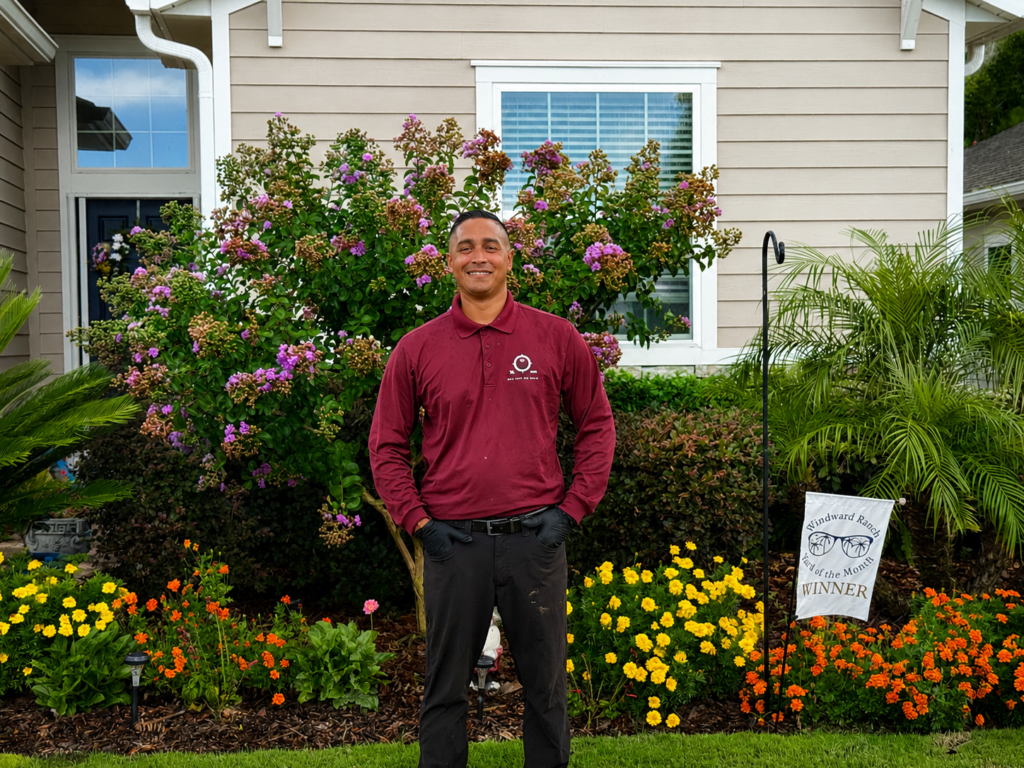
When you call Unity, you talk to Brandon — not a call center. The same licensed owner does the inspection, does the treatment, and comes back for the follow-up. If something needs adjusting, you’re not re-explaining your problem to a new technician every visit.
This is a real difference in North Florida. Big pest companies rotate technicians every 3–6 months. Your account is a work order in a queue. My account is my account — I remember every property, every family, every problem.
Why Our Bugs Stay Gone Longer
Every principle above compounds. IPM-based identification + perimeter-first application + product rotation + structural exclusion + owner-operator consistency = pest populations that get smaller over time, not the same annual battle.
Homeowners on our quarterly program for 12+ months often step down from full treatment to lighter maintenance because the underlying pest pressure has actually decreased. That’s the whole model. Not repeat business on the same problem — actual solution.
The pricing that comes with it: quarterly at $65/visit ($260/year) plus targeted interior treatment as needed. No long-term contract required — every service is month-to-month or job-by-job. We keep customers by doing good work, not by locking them in.
Ready for a pest program that actually reduces activity over time?
Free property inspection across St. Johns and Flagler Counties. Brandon does the walkthrough himself and quotes a program in writing. No long-term contract. Cancel any time.
See Residential Pest Control Services →Read next: Early Warning Signs of a Pest Infestation. Or dig into the full pest control guide.
Frequently Asked Questions
Do I have to sign a long-term contract?
No. Every service is month-to-month or job-by-job. If you’re on a recurring plan, you can cancel any time.
How often will you be inside my home?
Interior treatment happens only when the pest calls for it — German roaches, active ant colonies, silverfish issues, specific spot treatments. Most quarterly visits are exterior perimeter + walkthrough only.
Are your treatments safe for kids and pets?
Yes. EPA-registered products applied at label rate by a licensed operator. Interior applications dry within 60 minutes. If a family member has specific sensitivities, tell Brandon at the walkthrough and he’ll adjust product class.
What if I have a pest emergency between visits?
Call — we handle emergency callouts for active clients at no additional charge on most issues. Same-day or next-day response for St. Johns and Flagler.
Brandon Micalizzi is the licensed owner-operator of Unity Pest & Wildlife, based in St. Augustine, FL. He’s been serving St. Johns and Flagler Counties since 2023 as an owner-operator, with nearly a decade in the industry (since 2017). If you need help with setting up quarterly pest control, book a free inspection or call (386) 597-3955.
