What Makes Unity’s Annual Lawn & Palm Program Different — Our 4-Season Calendar Explained
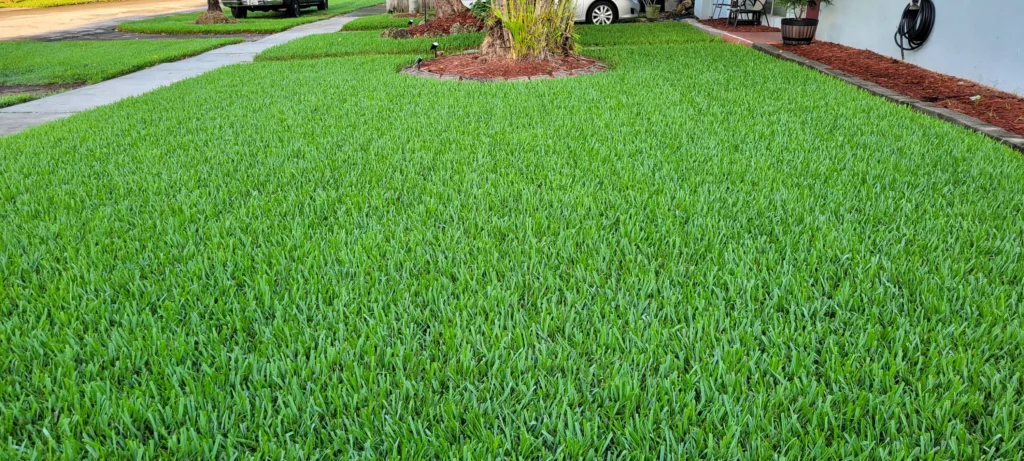
A healthy North Florida lawn is a calendar, not a set of visits. The right treatment at the wrong time is almost as bad as no treatment at all — fertilize in July and you burn the grass; apply chinch bug preventive in September and you missed the whole season. Here’s the four-season program Unity runs on lawn and palm accounts across St. Johns and Flagler, and why every part of the timing matters.
Why Florida Lawns Need a Calendar, Not Just Visits
North Florida’s climate compresses everything. Chinch bugs are active May through September. Brown patch peaks in humid fall weather. Palm nutrient leaching accelerates during summer thunderstorm rains. Sod webworms hit in mid-summer. Each of these has a specific window where preventive treatment is dramatically more effective than curative.
A “call us when you see a problem” model catches every issue too late. A calendar model catches each one in its earliest phase — which is when treatment is cheapest and most effective. That’s the whole idea.
The 4 Seasonal Programs (Winter, Spring, Summer, Fall)
Winter (Jan – Feb) — Pre-Emergent
Weed control before spring germination. This single pre-emergent application prevents the majority of the weed pressure you’d otherwise fight all summer. Winter fertilizer boost for palms to prep them for the growing season. Skipping this visit means April weeds you’ll be chasing for six months.
Spring (Mar – May) — Green-Up + Chinch Bug Prep
Post-emergent for broadleaf weeds that snuck past the pre-emergent. Slow-release nitrogen application. First palm feeding of the year. And the single most valuable action on the whole calendar: preventive chinch bug treatment in May, before the July peak. This one visit prevents nearly all chinch bug damage for the year.
Summer (Jun – Aug) — Fungal Prevention + Peak-Season Insect Control
Pre-brown-patch fungicide application before humidity peaks. Mid-season palm micronutrient round. Sod webworm monitoring (moths at dusk = webworms in the lawn). Second chinch bug application at peak humidity if warranted. Watch, treat, monitor.
Fall (Sep – Nov) — Root-Feed + Pre-Winter Cleanup
Recovery fertilizer for stressed turf. Final palm micronutrient round of the year. Late-season broadleaf weed control. Dormancy-timing adjustments. This is the “put the lawn to bed correctly” visit that determines how well spring starts.
Why We Use Palm-Specific Fertilizer (Not Lawn Blend)
Every lawn service in North Florida applies fertilizer. Very few use the right blend for palms.
Palms require 8-2-12 (high potassium) with micronutrients — manganese, magnesium, boron, iron. Generic lawn fertilizer is typically 16-4-8 or 20-5-10 (high nitrogen, low potassium, no palm micronutrients). Applying lawn fertilizer to palms doesn’t feed them — it actively accelerates the nutrient deficiencies you’re trying to prevent.
Unity’s lawn + palm accounts get palm-specific 8-2-12 with full micronutrient package applied three times per year. This is why our palm clients see recovery from yellowing within 60–90 days on visits where other services would have applied the same wrong fertilizer.
Chinch Bug Prevention — the Highest-Value Visit of the Year
Chinch bugs are the #1 killer of St. Augustine grass in North Florida. Peak damage runs July–August. Preventive treatment in May, applied at proper rate to the whole lawn (not just where you think chinch bugs are), prevents the damage that would otherwise become $1,500 of restoration in the fall.
This one visit is why our annual lawn program is a better financial deal than sporadic treatment. May chinch prevention = $65 (part of the quarterly). Curative treatment plus restoration after visible damage = $600–$2,000. Same year. Same lawn.
Fungal Prevention Timing — Ahead of the Humidity
Brown patch, gray leaf spot, and take-all root rot all thrive in humidity. Preventive fungicide applied before humidity peaks (early June and again in early October) prevents most fungal damage. Curative fungicide applied after visible damage limits spread but doesn’t reverse damage that already happened.
Consumer fungicide (Scotts DiseaseEx) is effective when applied preventively. What most homeowners get wrong is timing — they apply after the round patches show up, which is already too late.
Owner-Operator Consistency — Same Diagnosis, Same Person
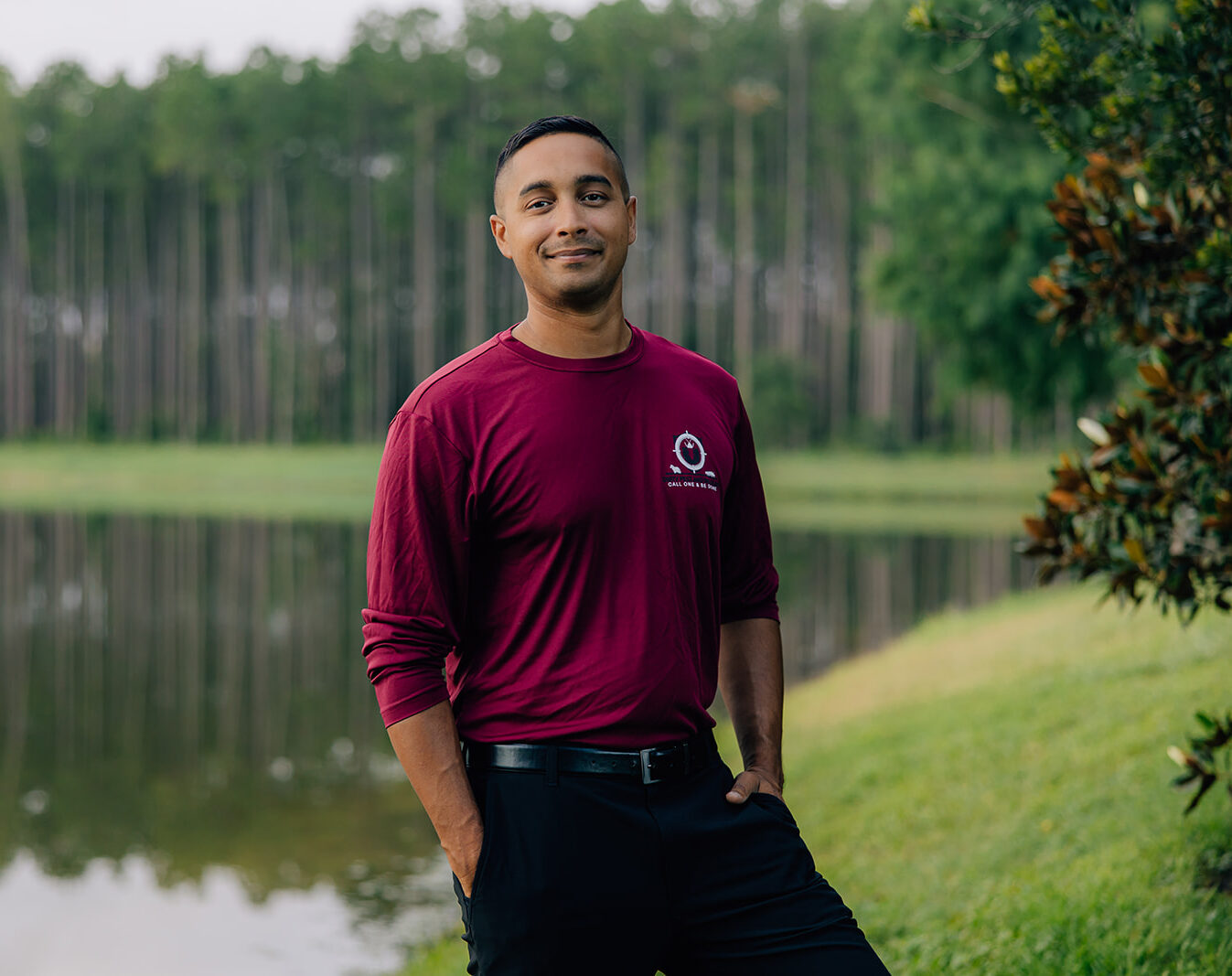
Brandon does every walkthrough personally. Same person diagnosing your palm deficiency in April is the same person applying the manganese sulfate in May and following up on frond recovery in July. No handoffs. No re-explaining. The person who knows your property is the person doing the work.
This matters more for lawns and palms than for pest control because lawn recovery is a 12–18 month arc. Continuity of care across that arc is what separates a lawn that recovers fully from a lawn that partially recovers and slides back.
What this costs: Standard lawn program starts at $65 per visit. Lawn + Palm combo (with dedicated palm nutrient program) is $85–$140/visit. Palm-only for HOA-managed lawns runs $180–$450 per treatment, priced by palm count and size. All quotes in writing before any work happens.
Ready for a lawn program built on a calendar, not on reactive visits?
Free property walkthrough across St. Johns and Flagler Counties. Brandon walks the yard, diagnoses the deficiencies and pest pressure, and quotes an annual program in writing. No obligation. No long-term contract.
See Lawn & Palm Care Services →Read next: Early Warning Signs Your Lawn or Palms Are in Trouble. Or dig into the full lawn and palm care guide.
Frequently Asked Questions
What’s the difference between quarterly and annual visits?
Our lawn program is annual (four seasonal visits with specific goals per season) rather than “quarterly” (evenly spaced pest control visits). Timing matters more for lawns than frequency alone.
Do you handle HOA-managed lawns?
Yes. Many of our accounts are HOA-managed properties where the HOA handles turf and we handle palms only. Palm-only programs price by palm count and size on a consistent 3-treatment-per-year schedule.
What’s the fastest way to see improvement on a stressed lawn?
Depends on the cause. Chinch bug treatment: 7–10 days. Nitrogen deficiency: 2–3 weeks. Fungal damage: no reversal, but treatment stops spread. Palm nutrient recovery: 60–90 days to see improvement in new fronds; 6–12 months for full recovery.
Do you offer one-time treatments?
Yes. Best for specific problems like an active chinch bug infestation or emergency palm nutrient treatment. Most homeowners see better long-term results from the annual program.
Brandon Micalizzi is the licensed owner-operator of Unity Pest & Wildlife, based in St. Augustine, FL. He’s been serving St. Johns and Flagler Counties since 2023 as an owner-operator, with nearly a decade in the industry (since 2017). If you need help with setting up annual lawn or palm care, book a free walkthrough or call (386) 597-3955.
