Lawn and Palm Questions to Ask a Realtor Before Buying a Home in St. Johns and Flagler
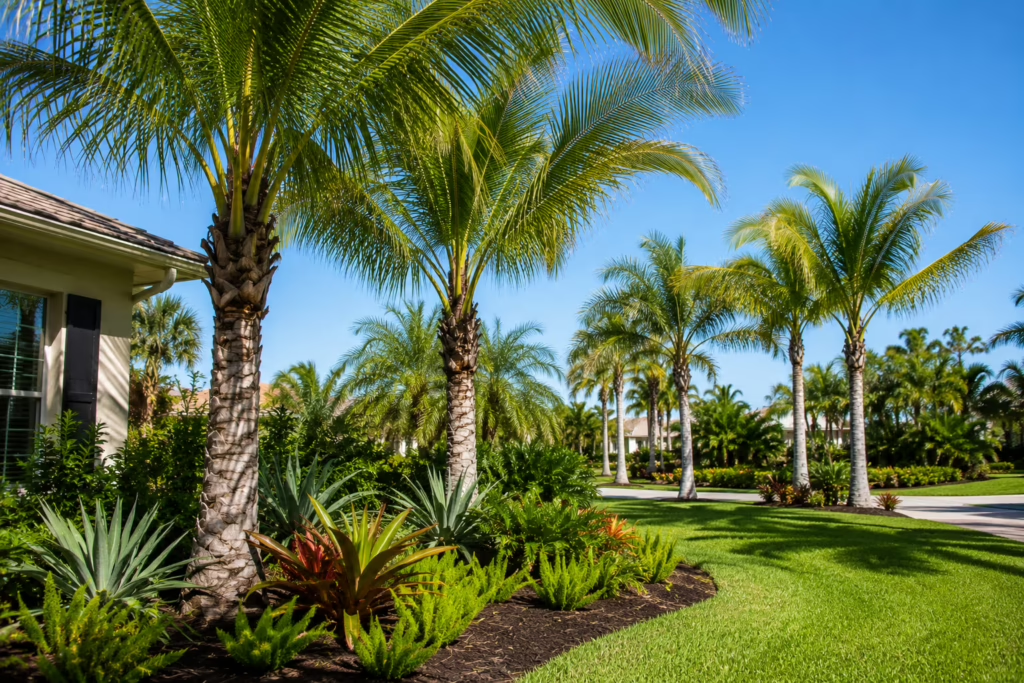
Buyers evaluate roof, HVAC, and appliances carefully. Landscape usually gets a “looks nice” or “needs work.” What most buyers miss is that palm health and lawn condition on a home you’re buying often forecast $2,000–$8,000 in first-year restoration costs — money that isn’t in your closing budget. Here’s how to catch it before you sign.
Why “Established Landscape” Isn’t Always a Positive
Real estate listings love the phrase “mature landscape” or “established palms.” Sometimes that means a beautifully maintained property. Other times it means 15-year-old palms with three years of nutrient deficiency masked by a dying fringe of green fronds. And a large lawn with visible weed pressure and thin patches is often a full-restoration project the previous owner didn’t finish.
The specific North Florida risk: palms that look “mostly okay” can be 12 months from replacement if the deficiency is caught late. Mature palm replacement runs $1,500–$4,500 installed per palm. A property with three sick palms is a $6,000–$12,000 surprise you didn’t budget for.
Questions to Ask Before You Make an Offer
- Does this property have a current lawn or landscape service? If yes, which company, what’s included, and can the seller share the last 12 months of records?
- Are the palms on a nutrient program? A “yes” is a good sign. A “the lawn service handles it” often means generic fertilizer that’s actively hurting the palms.
- Has any palm been replaced in the last three years? If so, what species and why?
- Any recent sod work? Fresh sod often patches damage from chinch bugs or fungal disease.
- What’s the irrigation situation? Working system, on a timer, or manual? When was it last serviced?
- Has the lawn had any pest treatment in the last year? Chinch bugs and sod webworms are the two most common.
- Any fungal issues in the lawn — brown patch, take-all root rot, gray leaf spot?
- What HOA landscape rules apply? Some Nocatee and WGV HOAs specify approved landscape services and have strict palm care requirements.
Signs to Look For During the Property Tour
Reserve 10 minutes for landscape-specific inspection:
- Palms — look at the crown, not the trunk. Bright green fronds with a strong new spear = healthy. Yellow older fronds tipping brown = potassium deficiency. Frizzled or stunted new spear = manganese deficiency (this one is dangerous — the palm may be dying).
- Lawn — look at the color distribution. Uniform dark green = well-fed. Patchy dark and yellow = uneven fertilization. Large brown patches in sun-heavy areas = chinch bug damage.
- Lawn — check for weed pressure. Broadleaf weeds in the lawn area indicate past-due fertilization and pre-emergent treatment.
- Lawn edges. Weeds along fence lines and sidewalk edges are normal and easy to fix. Weeds in the interior of the lawn indicate chronic care gaps.
- Landscape beds. Freshly mulched = often superficial fix before showing. Old mulch with weeds coming through = actual condition.
- Irrigation heads. Broken or missing heads = deferred maintenance and possibly dry spots later.
- Trees near the foundation. Overhanging branches touching the roof = wildlife highway and lawn shading issue.
Ignored Signs That Signal Neglect and Future Cost
- Palms with fewer fronds than expected for the species. Sabal palms should have 20–30 fronds. If yours has 12, something is very wrong.
- Palms that lean or list. Root system compromise from a variety of causes.
- Brown patches shaped as circles. Brown patch fungus. Preventive fungicide would have caught this — sign that ongoing lawn care is minimal.
- Bare soil showing through the lawn in specific spots. Ground-level chinch bug damage or dog-run wear.
- Trimmed palm trunks (the “hurricane cut”). This is a hurricane over-trim that removed necessary fronds. Aesthetically damaging and can lead to nutrient stress.
- Sprinkler heads pointed at the house or sidewalk. Overwatering the wrong areas often accelerates fungal issues.
What to Ask About Irrigation and Watering Systems
- Does the irrigation cover the whole yard or just certain zones?
- Is it on a rain sensor?
- When was it last serviced?
- What’s the monthly water bill in summer? (Overwatering shows here.)
- Is there a reclaimed water hookup? (Common in newer St. Johns County subdivisions.)
- Any leaks the seller knows about?
The First 90 Days After Closing — What to Set Up
Regardless of what condition you inherit, the first 90 days of ownership is the ideal window to establish baseline lawn and palm care. What we recommend on new-purchase properties:
- Free property walkthrough within 30 days of closing — establishes baseline nutrient and pest status
- Palm nutrient treatment if any deficiency signs are present (spring, summer, or fall depending on timing)
- Chinch bug preventive treatment if closing in April–June
- Set up on annual lawn program (or lawn + palm combo) for consistent care going forward
- Address irrigation issues before the first summer heat wave
Buying a home? Book a free lawn and palm assessment.
Free property walkthrough across St. Johns and Flagler Counties. Brandon diagnoses palm nutrient status, identifies pest and fungal issues, and quotes a recovery or maintenance program in writing. No obligation.
See Lawn & Palm Care Services →Read next: Buying a Home in St. Johns or Flagler? Your Pest, Termite, and Lawn Checklist. Or dig into the full lawn and palm care guide.
Frequently Asked Questions
Can a palm that looks sick actually be saved?
Most yellowing palms recover fully with 12–18 months of correct nutrient treatment. Palms with dead spears (manganese deficiency terminal stage) cannot be saved. On the walk-through, look at the new spear — if it’s green and pushing up, the palm is likely recoverable.
How much should I budget for landscape restoration on a home I’m buying?
Depends on severity. Well-maintained property with minor tune-up = $300–$600 first year. Moderate neglect with weed pressure and palm deficiency = $1,500–$3,500 first year. Severe with palm replacement and lawn re-sod = $6,000+.
Is a landscape inspection part of a home inspection?
No. Home inspectors evaluate the house, not the landscape. Landscape-specific inspections are usually additional and ours are free for St. Johns and Flagler properties.
Should I negotiate landscape issues into the sale price?
Yes, when the issue is documented and material. A palm heading toward replacement or a lawn requiring re-sod is a real dollar figure you can quantify with a written estimate.
Brandon Micalizzi is the licensed owner-operator of Unity Pest & Wildlife, based in St. Augustine, FL. He’s been serving St. Johns and Flagler Counties since 2023 as an owner-operator, with nearly a decade in the industry (since 2017). If you’re buying a home and want help with a pre-purchase lawn and palm assessment, book a free walkthrough or call (386) 597-3955.
