How to Handle Wildlife in Your Home — DIY Options and When to Call a Pro (St. Johns & Flagler)
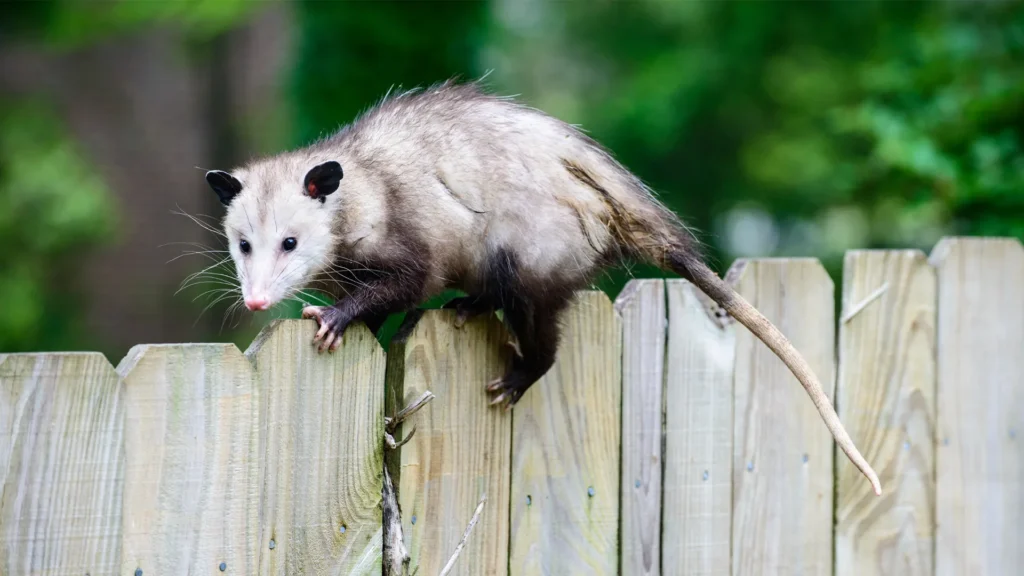

A homeowner in Palm Coast bought a live cage from Home Depot, set it in his garage, and caught a stray cat three nights in a row. He called me on the fourth day. Nothing wrong with the trap. Wrong bait, wrong location, and the wrong tool for the animal actually digging up his flowerbed (an armadillo, which won’t enter a garage). That’s the typical DIY wildlife story — right instinct, wrong execution.
DIY can work for some wildlife situations in St. Johns and Flagler Counties. It backfires — sometimes dangerously — in others. This is the honest breakdown.
Step 1 — Identify What Species You’re Dealing With
Every DIY attempt lives or dies on species ID. Raccoons, opossums, squirrels, armadillos, bats, and rodents each require different traps, different bait, different placement, and (critically) different legal frameworks in Florida.
Rules of thumb: nocturnal noises (9pm–5am) usually mean raccoon, opossum, or roof rat. Daytime activity means squirrel or bird. Yard damage with cone-shaped digs is armadillo. Fly-outs at dusk from a roofline are almost always bats — and bats trigger legal restrictions between April 15 and August 15 (see below).
If you can photograph droppings on a piece of paper next to a coin for scale, that’s often enough to make a species ID before any trap goes out. Snap the photo before you buy anything.
DIY Options That Sometimes Work
Havahart Live Cages (Home Depot, Lowes, Amazon)
Havahart is the default consumer brand for live-cage traps. The Home Depot line and the Lowes selection both carry small, medium, and large sizes. Large is what you need for a raccoon or opossum. Medium works for squirrels. Small is for rats and small squirrels.
These traps genuinely work when the right size is matched to the animal, the bait is right (marshmallow or fruit for raccoons; canned cat food for opossums; peanut butter for squirrels; unsalted seeds for rats), and placement is on the animal’s known path (never in the middle of a room).
Verdict: works for property damage removal — armadillos in a yard, opossums under a deck, single-animal raccoon in a garage. Doesn’t work for wildlife already inside an attic — you need eviction plus exclusion, not just capture.
One-Way Exclusion Doors (Amazon, specialty pest suppliers)
A one-way exclusion door is a mesh cone or hinged door mounted over the entry point that lets the animal out but not back in. Effective for bats, squirrels, and rats. Look for the Amazon selection or specialty pest suppliers.
Verdict: works when you can accurately identify the entry point AND you’re sure there are no young inside. If mothers with kits get sealed out, the kits die inside — smell, secondary insects, expensive drywall demo.
Steel Mesh and Hardware Cloth (Home Depot, Lowes)
The most cost-effective DIY category. Heavy-gauge steel mesh (¼-inch) blocks rodents, squirrels, and larger animals. Hardware cloth (⅛-inch) blocks bats, birds, and small animals. Both are stocked at Home Depot and Lowes.
Verdict: essential for any exclusion job — DIY or pro. The material is the same either way. Difference is knowing where to place it, how to secure it, and finding every entry point (not just the obvious one).
DIY Options That Backfire
Ultrasonic Repellers
Zero peer-reviewed evidence that ultrasonic repellers do anything to wildlife. Save your $40. Every study on ultrasonic pest deterrents has shown either no effect or short-term effect that wildlife adapt to within days.
Predator Urine and Ammonia
Mixed. Coyote urine ($20–$40 at Home Depot) can sometimes deter armadillos and small rodents in an open yard. Ammonia can push a raccoon out of a specific attic corner — briefly. Both are short-term and don’t solve the underlying problem (the entry point they’re using).
Poisoning
Poisoning wildlife inside a structure is the single worst DIY decision. The animal dies inside your wall or attic, you have a much bigger and more expensive problem than removal, and depending on species you may be violating Florida law. Never do this.
When to Call a Licensed FWC Nuisance Wildlife Trapper
Florida Fish & Wildlife Conservation Commission (FWC) requires a licensed nuisance wildlife trapper for:
- Bats at any time — plus the total prohibition on exclusion between April 15 and August 15 (maternity window)
- Any protected species — migratory birds under the federal Migratory Bird Treaty Act, gopher tortoises, alligators over 4 feet
- Invasive species that cannot be released alive under Florida law (Norway rat, roof rat, feral hog) — these require approved humane euthanasia
Beyond legal requirements, call a pro for:
- Any animal in your attic. DIY capture without professional exclusion means new animals move in within weeks.
- Multi-animal situations. Mothers with kits are always a pro job — the kits often need to be located and removed separately before exclusion.
- Structural damage already visible. Beyond removal, you need sanitation, insulation replacement, and warranty-backed exclusion — DIY doesn’t cover that.
Cost Comparison — DIY vs. Professional Removal
- DIY yard/deck removal (armadillo, opossum): $30–$80 for a Havahart trap plus $10 in bait. Success rate maybe 40% on first attempt.
- Professional yard/deck removal: $275–$550, same-week appointment, licensed trapper, guaranteed removal, follow-up.
- DIY attic exclusion (successful): $200–$400 in materials. Success rate maybe 20% without professional inspection. If you miss one entry point, animals return within weeks.
- Professional attic exclusion: $650–$1,600 depending on species and property size. One-year warranty against reentry through any sealed point.
The pattern I see most often: homeowner spends $150–$300 on DIY gear over a few weeks, doesn’t fully solve it, calls us anyway. Total spend ends up higher than if they’d called us on day one.
Not sure if it’s a DIY situation? Book a free inspection.
Free property walkthrough across St. Johns and Flagler Counties. Brandon does the inspection himself. If your situation is truly DIY-able, we’ll tell you and not charge you. If it’s not, you’ll know exactly why before any work happens.
See Wildlife Removal Services →Read next: DIY Wildlife Removal Products Compared — Head-to-Head Review. Or the full wildlife removal guide for FWC rules, species, and treatment approach.
Frequently Asked Questions
Can I release a raccoon I trap on my property?
You can release it on the same property, or humanely dispatch it. You cannot legally drive it several miles and release it in a park or preserve without an FWC permit for relocation.
What if I’ve already sealed an entry point and now smell something bad?
Call — that day. You may have sealed an animal inside. The longer it decomposes, the worse the sanitation and drywall demo needed to remove it.
Are the traps at Home Depot the same as what pros use?
Similar. The core mechanism is identical. Pros generally use heavier-gauge steel and larger cage sizes, but a properly-sized Havahart from Home Depot will catch a raccoon just fine. The bigger difference is placement, bait, and knowing what to do after the animal is caught.
Can I do exclusion myself and skip the pro?
You can, but the failure mode is expensive. Missing one entry point means new wildlife within weeks — often the same species using the same route. A professional inspection finds every gap, not just the obvious one, and comes with a warranty.
Brandon Micalizzi is the licensed owner-operator of Unity Pest & Wildlife, based in St. Augustine, FL. He’s been serving St. Johns and Flagler Counties since 2023 as an owner-operator, with nearly a decade in the industry (since 2017). If you’re dealing with wildlife activity, book a free inspection or call (386) 597-3955.
