After a Decade in Pest Control, Here Are the Best Ways to Do Wildlife Removal in St. Johns & Flagler Counties
A woman in a Nocatee cul-de-sac called me on a Tuesday morning in 2018. She’d heard a scratching noise above her master bedroom for three nights. Her husband — who traveled for work — told her it was probably just palm fronds hitting the roof in the wind. It wasn’t. It was a mother raccoon and four kits nesting in the soffit vent above her closet.
By the time I got up there, the attic insulation was ruined, the drywall had a stain the size of a dinner plate from urine soaking through, and the entry hole she’d used to get in had been chewed twice as wide by her kits practicing their climbing. Total cost to make the family whole again: sanitation, exclusion, insulation replacement, drywall repair, roofline flashing. Almost $4,800. If the client had called at the first scratching sound, the same job would have run about $650.
That gap is the whole story of wildlife removal in North Florida — and it’s the reason I’ve spent the better part of a decade explaining to homeowners in St. Johns and Flagler Counties that fast matters more than cheap. This is the guide I wish every new customer read before they picked up the phone.
The Wildlife Reality in St. Johns and Flagler Counties
People who move here from up north assume Florida wildlife is a summer problem. It’s not. Our sub-tropical climate means raccoons, opossums, armadillos, squirrels, and bats stay active year-round. There’s no hard freeze that knocks populations back. The kits from spring survive the winter, breed the next spring, and the population compounds.
Add to that the master-planned communities that have exploded across St. Johns County over the past ten years — Nocatee, Silverleaf, World Golf Village, Beacon Lake — and you have a specific problem. These communities were built on land that used to be pine flatwoods, palmetto scrub, and cypress bottoms. The wildlife didn’t leave. It just relocated into your soffits, your palm skirts, and the space under your pool deck.
Palm Coast is its own case study. The city was platted in the 1970s as one massive development, but the buildout took decades — so you have older canal-front homes bordered by dense preservation land on one side and new construction on the other. That interface is the sweet spot for raccoons, opossums, and armadillos. My highest concentration of wildlife calls in any given year comes from R-sections in Palm Coast and the older neighborhoods around Bunnell and Flagler Beach.
The final piece of the puzzle: homeowners insurance does not cover wildlife damage. Read your policy. Damage caused by “vermin” or “wildlife” is almost always excluded. So the drywall stain, the ruined insulation, the chewed A/C wiring — you’re paying for all of it out of pocket. That’s why the “wait and see if it goes away” approach is the single most expensive decision homeowners make.
FWC Rules Every Florida Homeowner Should Know
Florida Fish & Wildlife Conservation Commission (FWC) regulates all nuisance wildlife work. This is the part most homeowners don’t realize until they’ve already done something illegal.
The Bat Maternity Window (April 15 – August 15)
Between April 15 and August 15 you cannot exclude or evict bats from a structure in Florida. It’s the maternity roost window — mothers are raising pups that can’t yet fly. If you seal a colony out during this window, the pups die inside your wall. That leads to smell, secondary insect problems, and a federal violation.
If you have bats and it’s April, the correct answer is: leave them alone until August 15, then do the exclusion. In the meantime we can install temporary rooftop exclusion cones to keep it contained. This is a very common conversation I have with new Palm Coast and Flagler Beach clients in early spring.
Protected Species
Migratory birds are federally protected under the Migratory Bird Treaty Act. That means you cannot destroy an active nest with eggs or chicks in it — even if it’s on your porch light, in your grill, or above your front door. Same for gopher tortoises, which get relocated only by permitted operators, and any alligator over four feet in length, which is FWC’s problem, not yours.
Live Trap and Release vs. Lethal Take
Most nuisance mammals in Florida can be live-trapped and released or lethally taken, but the rules vary by species. Raccoons and opossums can be released on the same property they were caught on or humanely dispatched. Armadillos have no closed season and no bag limit, but there are transport rules. Squirrels vary by species. And invasive species — Norway rats, roof rats, feral hogs — cannot be released alive under Florida law. This is why “someone I know just catches them and drives them out to Guana” is a legally messy sentence.
The short version: if you’re not a licensed nuisance wildlife trapper, hire one. The permit and species knowledge is what you’re actually paying for — the trap itself is $30 at Ace Hardware. What matters is knowing when to use it, where to release, and how to document the removal.
The Species We Deal With Most in St. Johns and Flagler
Raccoons — The Attic Specialist
Raccoons are the single most damaging species I deal with. They’re strong enough to peel back roof flashing, smart enough to remember an entry point across seasons, and their kits stay with the mother for the better part of a year. A raccoon in your attic is not just a raccoon — it’s a family that’s going to grow, damage your structure, foul your insulation, and use the same access point again next spring.
Best-case exclusion is done before the kits are mobile. If you hear noise in your attic in February or March, call immediately. By April you’re doing exclusion around a mother with kits, and that’s a much longer, more expensive job.
Armadillos — The Yard Destroyers
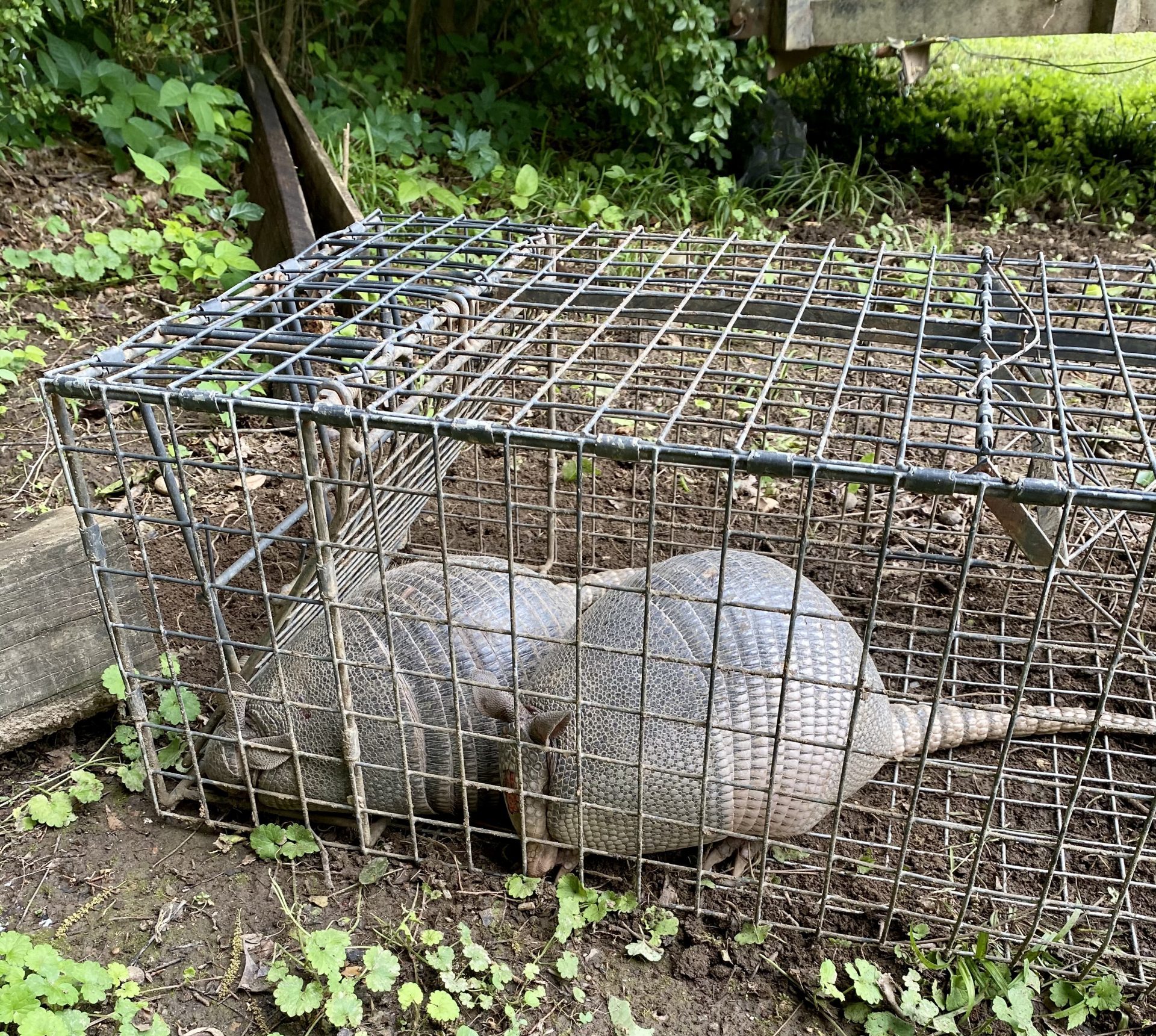
Armadillos don’t damage structures much. They wreck landscapes. Their entire diet is grubs, worms, and insects that live in the top few inches of soil, and they find them by digging. A single armadillo can turn a well-kept St. Augustine lawn into a moonscape in two weeks.
The kicker is that armadillos are chasing food. If your lawn has a heavy grub population, you have an armadillo problem waiting to happen. Real fix is usually two-part: remove the armadillo, then treat the grubs so the next one moves on. This is one of the reasons our lawn & palm care and wildlife programs overlap so often — the pest that killed your lawn is what invited the armadillo.
Opossums — Under Everything
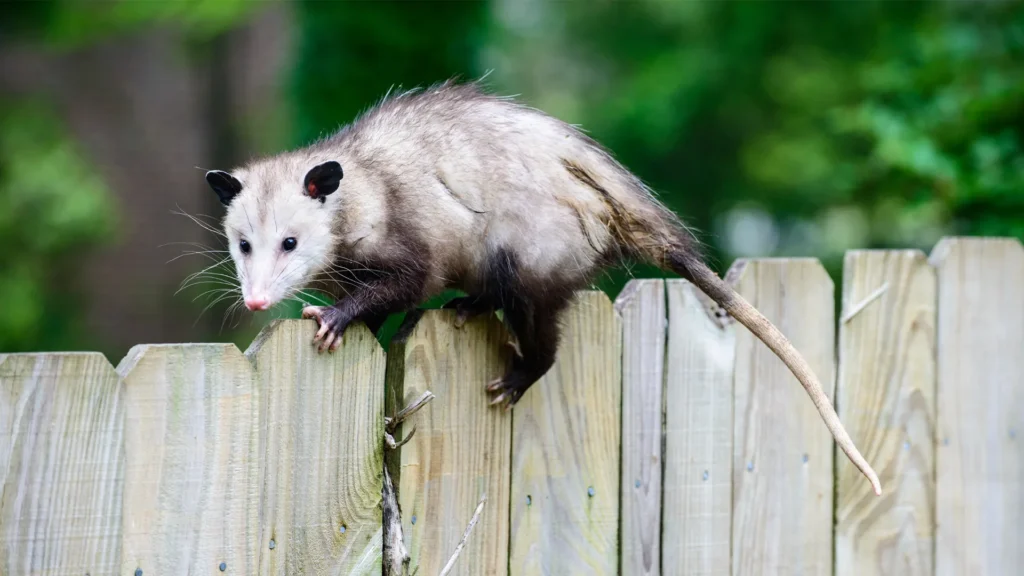
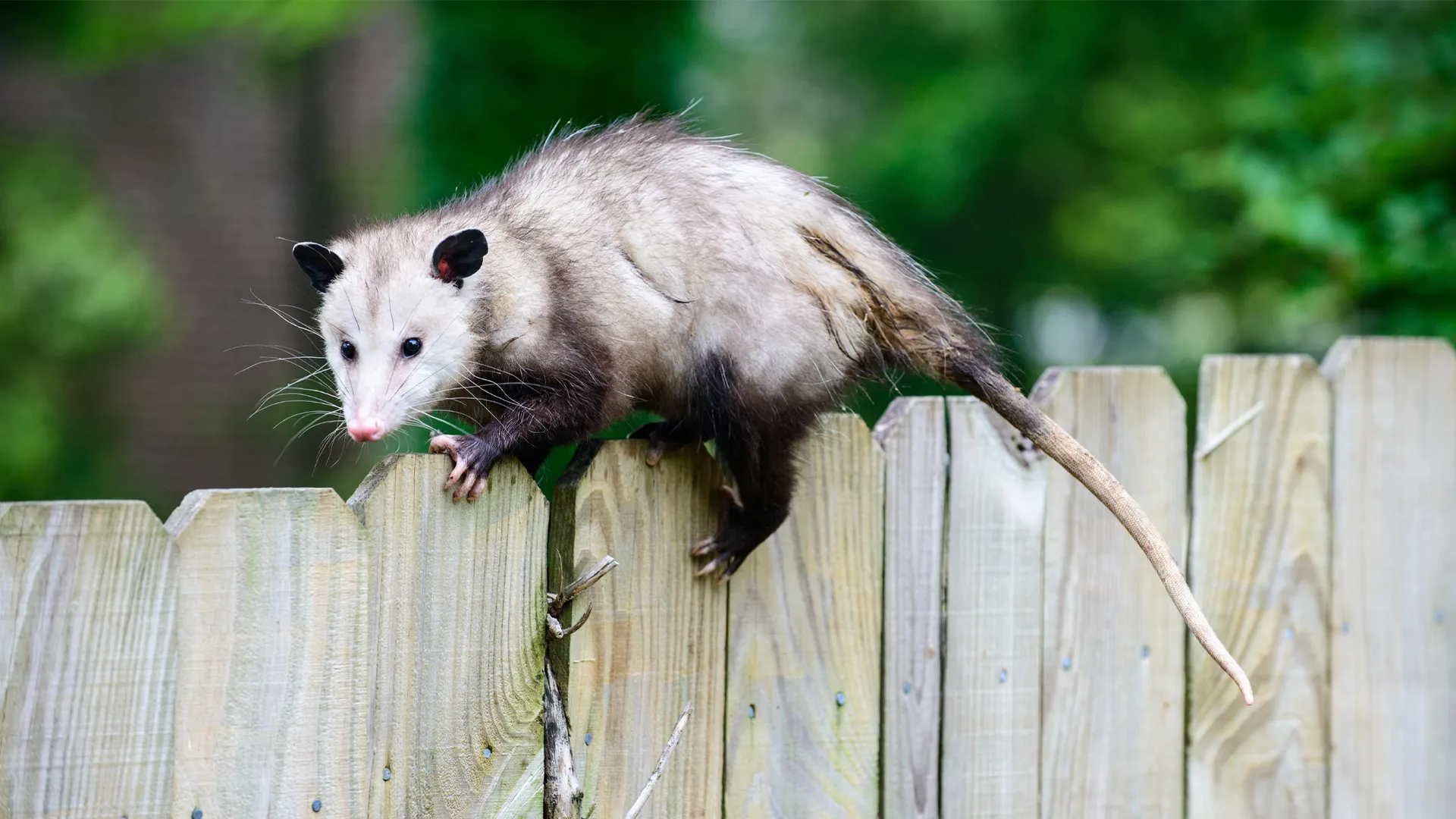
Opossums are the least aggressive nuisance mammal I deal with, but they end up in the worst places — under pool decks, in crawl spaces, behind pool equipment sheds. They’re solitary and short-lived, so unlike raccoons you rarely deal with families. But their scent trails attract other wildlife, and if one opossum dies under your deck you’re going to smell it for weeks.
Bats — The Legal Landmine
Brazilian free-tailed bats are the species we see most in soffits and tile roofs across St. Augustine and Palm Coast. A small colony (10-20 bats) can produce enough guano to compromise insulation and become a respiratory hazard in the space below. As covered above, timing is everything — bat exclusion is only legal between August 15 and April 15.
Squirrels — Attic Vents and Dryer Vents
Eastern gray squirrels chew through soffit vents, gable vents, and even old dryer vent covers to nest in attics. Damage is usually less severe than raccoons but the risk is different — squirrels chew wiring. A squirrel nest that’s been up in your attic for six months is a fire risk.
Snakes — Mostly Non-Venomous, But Know the Venomous Ones
Ninety-five percent of the snake calls I get in St. Johns and Flagler are non-venomous — black racers, rat snakes, garter snakes. But the four venomous species in North Florida (cottonmouth, copperhead, pygmy rattler, and coral snake) do live here. If you can, take a photo before you call. Distance is fine — a phone camera zoom is plenty. That way we can ID the species and give you the right advice before we’re on-site.
What Actually Works — Beyond “Just Set a Trap”
The trap is the visible part of wildlife removal. It’s also the least important part. What separates a job that lasts from a job that has to be redone in eight months is the three things that happen around the trap: correct identification, structural exclusion, and sanitation.
Identification First, Then Trap
Different species require different trap types, different bait, and different placement. A raccoon-sized live cage set for a rat is going to catch nothing. A trap baited for opossum is going to catch a stray cat every time. I’ve inherited situations where a homeowner ran a trap for two weeks without a single catch because it was the wrong trap for the animal that was actually in the attic. Identification is a 20-minute visit and it saves weeks.
Exclusion Is Half the Job
Trapping without exclusion is temporary. If you don’t seal the entry point with the right material (heavy-gauge steel mesh for raccoons and squirrels, hardware cloth for bats and birds, foam and flashing for smaller gaps), a new animal moves in within weeks. Every exclusion job I do carries a one-year warranty on the sealed entry points because I’m confident in the material and technique. The two-week-then-forget-about-it operators can’t offer that.
Sanitation and Deodorization
Scent trails are the second-most-underestimated factor in wildlife recurrence. A raccoon that lived in your attic left oils, urine, and pheromones on every surface it touched. That trail is a beacon to the next raccoon looking for a den. If we don’t remove the fouled insulation and neutralize the scent with an enzyme-based sanitizer, we’ve just made your house the most attractive real estate in the neighborhood.
What to Do When You First Suspect Wildlife
Here’s my honest advice, whether or not you ever call me:
- Note the time of day. Raccoons and opossums are nocturnal — noise between 9pm and 5am is usually them. Squirrels are diurnal — noise during daylight hours. This one detail narrows the species quickly.
- Note the location. Above ceiling = attic access. In the wall = squirrel or rat, most likely. Under the floor = opossum, snake, or feral cat.
- Do not seal anything yet. If you seal the entry point and there’s an animal inside, it dies inside. If it’s a mother, kits die too. Both smell terrible and both cost more to fix than the original problem.
- Take photos of any droppings or damage. Wildlife identification is often possible from photos alone. If you can get a clear shot of droppings on a piece of paper next to a coin for scale, that’s enough for me to make a first assessment.
- Call a licensed operator, not a pest company that “also handles wildlife.” The FWC rules are complicated, and a company without a nuisance wildlife trapper on staff is going to make expensive mistakes. Ask if they hold an FWC nuisance wildlife trapper permit before you book.
Suspect wildlife activity in your home?
Free property inspection across St. Johns and Flagler Counties. Brandon does the inspection himself, quotes in writing, and gives honest advice — even when the honest advice is “leave it alone for now.”
See Wildlife Removal Services →Frequently Asked Questions
How much does wildlife removal cost in St. Johns and Flagler Counties?
Single-animal live capture with exclusion typically runs $275–$550 for standard species like raccoons, opossums, or squirrels. Multi-animal families or bat colonies with structural sanitation can run $850–$2,400 depending on scope. Every inspection is free and every quote is in writing.
Do I need a permit to remove a raccoon in Florida?
For most nuisance species (raccoon, opossum, armadillo) on your own property, no. But for protected species (bats, migratory birds, alligators), Florida law requires a licensed trapper. And even for unprotected species, transport and release rules apply — you cannot simply release an armadillo across the road, for example.
Why can’t I just seal the entry point myself?
Because if the animal is inside when you seal it, it dies inside. Mothers with young make this outcome nearly guaranteed. The correct order is: identify → remove → exclude → sanitize. Skipping to exclusion is the most common DIY mistake I see.
How long does a typical wildlife job take?
Single-animal jobs are usually one visit for capture and one follow-up visit for exclusion and sanitation, spread over three to seven days. Bat colonies during the legal window take one to two weeks. Complex multi-species jobs (raccoons plus a bat colony plus rats sharing the same attic) can take three to four weeks.
Is your wildlife removal humane?
We use live-cage traps, one-way exclusion doors, and hand-capture wherever the species allows. We do not use glue traps or lethal snap-traps for wildlife. For invasive species that Florida law prohibits releasing (Norway rats, roof rats), we use approved humane methods.
Brandon Micalizzi is the licensed owner-operator of Unity Pest & Wildlife, based in St. Augustine, FL. He’s been serving St. Johns and Flagler Counties since 2023 as an owner-operator, with nearly a decade in the pest and wildlife industry (since 2017). If you have wildlife activity in your home, book a free inspection or call (386) 597-3955.
