What Makes Unity’s Wildlife Removal Different — Our Trap → Exclude → Sanitize Process

Most wildlife removal operators do one thing well: catching the animal. That’s the visible part of the job. It’s also the part that fails most often — because if you catch a raccoon and don’t fix the entry point or clean up the scent trail, a new raccoon is inside within a month. This is the five-step process Unity runs on every wildlife job in St. Johns and Flagler Counties, and why the pieces most operators skip are what actually keep wildlife out for good.
Step 1 — Full Property Inspection (Species + Entry Points)
Inspection
Species ID + Every Access Point Mapped
Interior + exterior + roofline + attic. We identify the species, count individuals, find every active and potential entry point (not just the obvious one), and check for young that would delay removal. Inspection typically runs 45–75 minutes and is always free — no obligation.
The single biggest reason wildlife problems recur is that homeowners (and lower-quality operators) find one entry point and stop looking. There are almost always three or four. On the last Nocatee raccoon job I did, the visible hole was in the gable vent — but the actual regular access was a soffit gap the homeowner had never noticed. Sealing the gable and leaving the soffit would have brought the same family back within weeks.
The inspection is also where species ID happens. Different species require different traps, different bait, different timing, and (critically for Florida) different legal frameworks. Getting species wrong at inspection is what makes DIY removals fail so often — and it’s why we don’t set any traps until we know exactly what we’re catching.
Step 2 — Species ID and FWC Compliance
Compliance
Florida Fish & Wildlife Rules, Handled
Florida Fish & Wildlife has specific rules — some species require permits, some have seasonal restrictions (bats are the big one, April 15 – August 15). We handle the compliance side so you don’t have to think about it.
Every homeowner who tries DIY wildlife work eventually bumps into FWC regulations. Bats can’t be excluded between April 15 and August 15 (maternity window). Migratory birds nesting on your porch are federally protected. Norway rats and roof rats can’t be released alive under Florida law. Alligators over 4 feet are FWC’s problem, not yours.
Getting these wrong isn’t just theoretical. FWC violations carry real fines. As a licensed nuisance wildlife trapper, we handle the compliance side without homeowners needing to become experts in Florida wildlife law.
Step 3 — Live Trapping or Direct Capture
Removal
Humane Live-Cage, One-Way Doors, or Hand Capture
Depending on species and access, we use humane live-cages, one-way exclusion doors, or hand-capture. Traps are checked daily until removal is complete. We do not use glue traps or lethal snap-traps for wildlife.
This is the part every operator does. What we do differently:
- Daily trap checks. Not “we’ll come back in a few days.” An animal in a trap that isn’t checked daily is a welfare issue and often a legal issue.
- Correctly sized trap, correctly baited. Right size for the species you actually have. Right bait based on food preference (marshmallows for raccoons, canned cat food for opossums, earthworms for armadillos).
- Species-appropriate release. Where Florida law permits, humane relocation. Where it doesn’t (invasive species), approved humane methods.
Step 4 — Entry-Point Exclusion (Materials Matched to Species)
Exclusion
Every Gap Sealed with the Right Material
The trap is only half the job. We seal every gap with the right material — heavy-gauge steel mesh for rodents and squirrels, hardware cloth for bats and birds, foam + flashing for smaller gaps. Warranted for one year against reentry through any point we sealed.
Exclusion is the piece that separates a job that lasts from a job you’ll be paying for again. Materials matter — foam alone doesn’t stop chewing rodents (they chew right through). Chicken wire doesn’t stop raccoons (they peel it back). Every entry point needs the right material for the species that would come back to that spot.
The one-year warranty on our exclusion work is the accountability piece. If a wildlife animal gets back in through any point we sealed within 12 months, we come back and re-do it at no charge.
Step 5 — Sanitation and Deodorization
Sanitation
Scent-Trail Removal + Contamination Cleanup
Attic droppings and soiled insulation get removed and hauled off. We apply enzyme-based sanitizer to neutralize scent trails that attract new wildlife. If insulation replacement or chewed wiring inspection is needed, we coordinate with a licensed contractor.
This is the piece most operators skip. Every wildlife animal that spent time in your attic left oils, urine, and pheromones on every surface it touched. That trail is a beacon to the next wildlife looking for a den — a raccoon smell in your attic advertises the space as “safe raccoon housing” to every raccoon in the neighborhood.
Enzyme-based sanitizer breaks down the scent chemistry so the space stops advertising. Contaminated insulation gets removed and hauled off (not just sprayed over). If chewed wiring is discovered during exclusion, we coordinate with a licensed electrician before we close things up.
Why Our One-Year Exclusion Warranty Is Different
Most wildlife operators don’t offer warranties, or offer 30-day warranties. We offer a full year against reentry through any point we sealed. If a raccoon gets back in through your fascia or a squirrel through the gable vent within 12 months, we come back and fix it at no charge.
The reason we can offer that: our process finds every entry point and our materials are the right ones for each species. If we didn’t do exclusion thoroughly, we couldn’t afford to warranty it.
What Sets Local Owner-Operator Service Apart
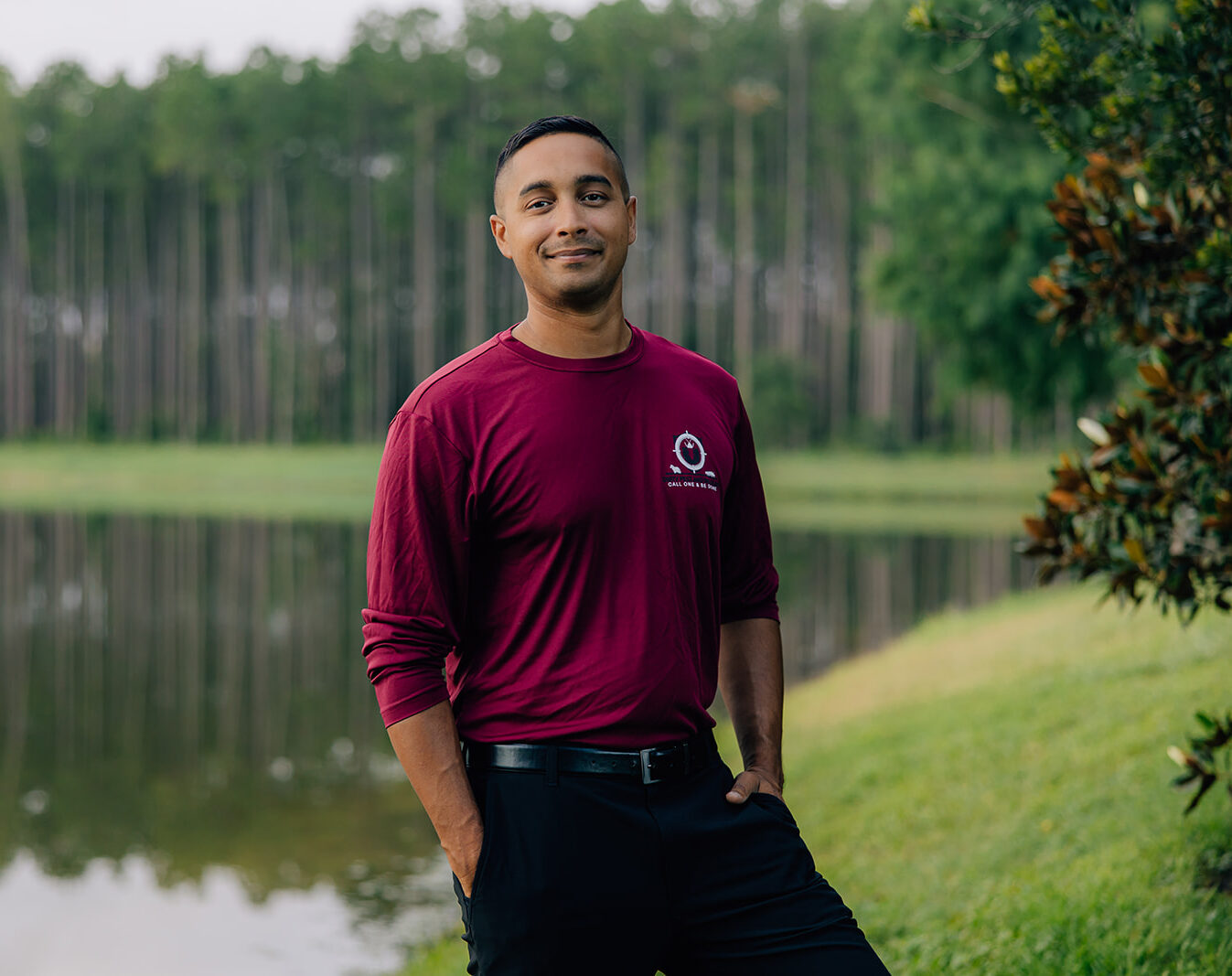
Brandon does every inspection himself and does most of the actual work. That means the person diagnosing your problem is the same person doing the removal and the same person you’ll talk to if something needs a follow-up. No call center, no rotating technicians, no upsells scripted from corporate. Same face, same phone number, same accountability.
The math on why this matters: a wildlife job done right the first time costs $650–$1,600 depending on species and complexity. A wildlife job done poorly — capture only, weak exclusion, no sanitation — often costs $1,000 up front and $2,500+ six months later when the new animals arrive. We’d rather do it right once.
Ready for a real wildlife removal — not just a trap-and-go?
Free property inspection across St. Johns and Flagler Counties. Same-week appointments. Brandon does the inspection himself. Written quote before any work happens. One-year exclusion warranty on every job.
See Wildlife Removal Services →Read next: Early Warning Signs You Have Wildlife in Your Home. Or the full wildlife removal guide.
Frequently Asked Questions
How long does a typical wildlife job take?
Single-animal jobs are usually one visit for capture and one follow-up visit for exclusion and sanitation, spread over three to seven days. Bat colonies during the legal window take one to two weeks. Multi-species jobs can take three to four weeks.
What’s included in the one-year warranty?
Any reentry through an entry point we sealed. If wildlife gets back into the attic through a different (previously unseen) opening, that’s a new inspection — but that’s rare because we’re thorough at initial inspection.
Do you use lethal methods?
Only where Florida law requires it — invasive species (Norway rats, roof rats) that can’t be legally released alive. Everything else is humane live-cage or one-way exclusion.
What about sanitation cost — is that separate?
Basic scent-trail sanitation is included in every job. Full attic decontamination and insulation replacement is quoted separately based on scope and always disclosed upfront in writing.
Brandon Micalizzi is the licensed owner-operator of Unity Pest & Wildlife, based in St. Augustine, FL. He’s been serving St. Johns and Flagler Counties since 2023 as an owner-operator, with nearly a decade in the industry (since 2017). If you need help with wildlife activity, book a free inspection or call (386) 597-3955.
