Lawn & Palm Care

Lawn Fertilization, Palm Tree Care & Shrub Health in St. Augustine & Palm Coast

North Florida lawns and palms fail for specific reasons — chinch bugs in your St. Augustine grass, manganese deficiency in your Sabal palms, sod webworms after August humidity. Unity treats the exact cause, not a generic bag of fertilizer. Same owner who handles your pest and termite service does your lawn — one call, four services.

Free Lawn Assessment Call (386) 597-3955
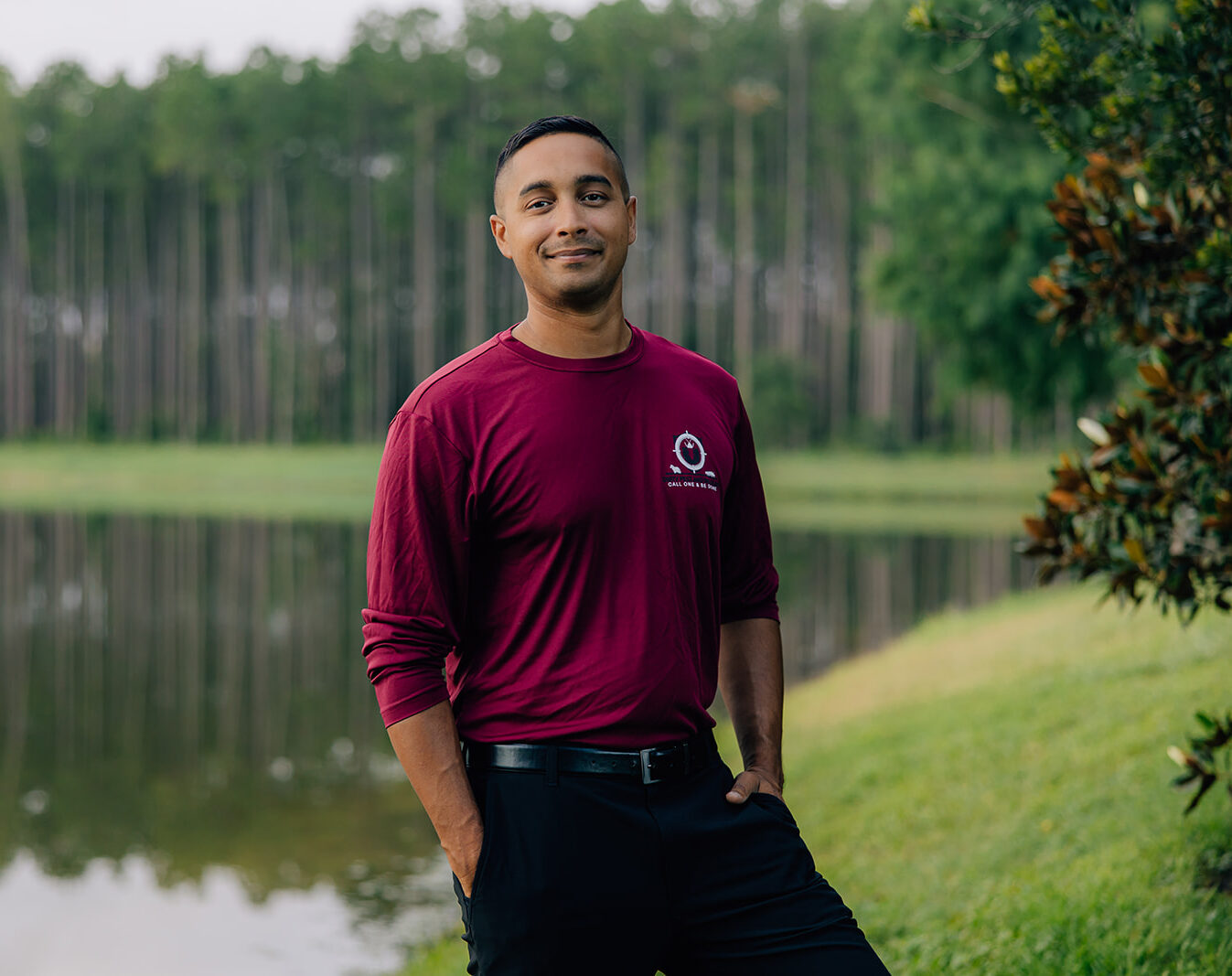
Brandon Micalizzi, licensed owner-operator of Unity Pest & Wildlife
About Brandon Micalizzi

Pest, wildlife, and lawn care you can trust across North Florida

As a Florida-based owner-operator since 2023 (in the industry since 2017), I'm proud to deliver expert pest control, termite treatment, wildlife removal, and lawn and palm care to homes and businesses across St. Johns and Flagler Counties. Every service call is handled by a licensed local operator — no scripts, no upsells — just straight answers and lasting solutions for your property.

9+
Years Experience
1,000+
Homes Serviced
Featured Reviews

What our customers say

Read reviews from over 40+ happy customers across St. Johns and Flagler Counties who trust Unity for pest, termite, wildlife, and lawn care.

Google
★★★★★

The local team at Unity does a great job. My yard looks fantastic!
Google
★★★★★

Do yourself a favor hire this company! Brandon and crew will take great care of all your needs! 10/10 experience!

Google
★★★★★

Unity pest control is an Awesome company to work with in all your needs for Home and property with pest extermination. The owner is very knowledgeable, personable and always ready to come when needed. Highly recommend his services.

Google
★★★★★

Brandon did an excellent job of sealing up all of the areas where any wildlife could enter my attic. He made it impossible for the animal to return and I am grateful. I highly recommend his services.

Google
★★★★★

Unity Pest Control is now our go-to for all our pest control services. Brandon is absolutely the best! Always professional, knowledgeable, and goes the extra mile. He's also getting our lawn back into shape. Local, affordable and honest.

Google
★★★★★

I wholly trust this company with helping me protect my lawn. The information Brandon provides, his sincerity, and timeliness is exceptional compared to many services I've used over the years. As long as he does pest control he is my pest control guy!

Google
★★★★★

My lawn has never looked better and I love that they handle my pest and termites! One company to do it all. Excellent service and very knowledgeable.

Google
★★★★★

I had a major ant and cockroach problem that I couldn't fix myself. Brandon showed up on time, did an evaluation, and we hired him for the job. He was very thorough, knew what he was talking about, and walked us through what he was doing and why. Excellent job and highly recommend.

Read all 43 reviews

What We Handle

A+ Treatment for North Florida’s Trickiest Landscapes

Six problems we see on every service call across St. Johns and Flagler Counties — and the specific treatment for each.

St. Augustine Grass Programs

The dominant lawn grass in North Florida — beautiful when it’s healthy, prone to chinch bugs, brown patch fungus, and sod webworms. Our annual program covers fertilization, weed control, and pest treatment on a schedule tuned for the FL climate.

Palm Tree Fertilization

Palms need specialty fertilizer with the right nitrogen-potassium ratio plus micronutrients (manganese, magnesium, boron). Generic lawn fertilizer will hurt palms. We use slow-release palm-specific blends applied 3 times per year — spring, mid-summer, and fall.

Chinch Bug Treatment

The #1 killer of St. Augustine grass in North FL. Symptoms: yellowing patches that spread outward, usually in sun-exposed areas near driveways and foundations. Treatment is a targeted insecticide plus cultural changes (mow height, watering pattern).

Sod Webworm Control

Late-summer pest that skeletonizes grass blades — you’ll see moths flying up when you walk through the lawn at dusk. Treated with beneficial nematodes or a targeted insecticide during the larval stage. Timing matters more than the product.

Shrub & Ornamental Care

Fertilization plus pest control for hedges, ornamentals, and foundation plants. Common issues we treat: aphids on hibiscus, scale on gardenias, whitefly on ficus. Monitored quarterly along with your lawn program.

Brown Patch, Gray Leaf Spot & Take-All Root Rot

Florida’s humidity and warm nights make it prime fungal weather. Brown patch appears as round dead spots after wet fall/spring. Gray leaf spot causes elongated lesions. Take-all root rot kills patches in summer. All three treatable with the right fungicide, timed correctly.

Palm Tree Health

Why Your North Florida Palms Are Yellowing — And What to Do

Nine out of ten “sick palm” calls we get in St. Johns and Flagler are actually nutrient deficiencies — not disease. North Florida’s sandy soil doesn’t hold micronutrients, and generic lawn fertilizer makes it worse. Here are the four deficiencies you’ll see, in order of frequency.
Manganese Deficiency (“Frizzle Top”)

Symptom
New fronds emerge weak, frizzled, and yellow. The growing tip looks stunted or crumpled. Fatal if untreated — this is the deficiency that kills palms.
Palms Affected
Sabal (cabbage palm), Queen, Coconut, and Date palms.
Fix
Manganese sulfate soil drench plus a foliar spray. Applied 2–3 rounds in the growing season. Prevention via correct palm-specific fertilizer avoids recurrence.

Potassium Deficiency

Symptom
Older fronds yellow from the tip inward, then die back. Palms move potassium from old fronds to new growth when they can’t get enough — that’s the yellowing you’re seeing.
Palms Affected
Very common in Sabal palms and Coconut palms — the most-planted species in Palm Coast and St. Augustine.
Fix
Slow-release potassium sulfate applied 3 times per year. Correct the ongoing fertilizer program to a proper 8-2-12 palm blend to prevent recurrence.

Magnesium Deficiency

Symptom
Yellow bands along the edges of older fronds, with the center staying green. Called chlorosis. Older, taller palms show it first.
Palms Affected
Sabal palms and Date palms most commonly. Older Nocatee and WGV palm plantings are showing this now.
Fix
Magnesium sulfate soil application, 2 rounds per year. Best combined with the potassium program since the two deficiencies often co-occur.

Boron Deficiency

Symptom
New fronds emerge truncated, deformed, or “crumpled.” Less common than the other three but destructive when it happens — often confused with frizzle top.
Palms Affected
Palms in sandy Palm Coast lots with heavy rain leaching. Also newly-installed palms with poor soil.
Fix
Foliar boron spray — carefully. Over-application is toxic to the palm, so this is a licensed-operator-only treatment. Prevention via balanced palm fertilizer.
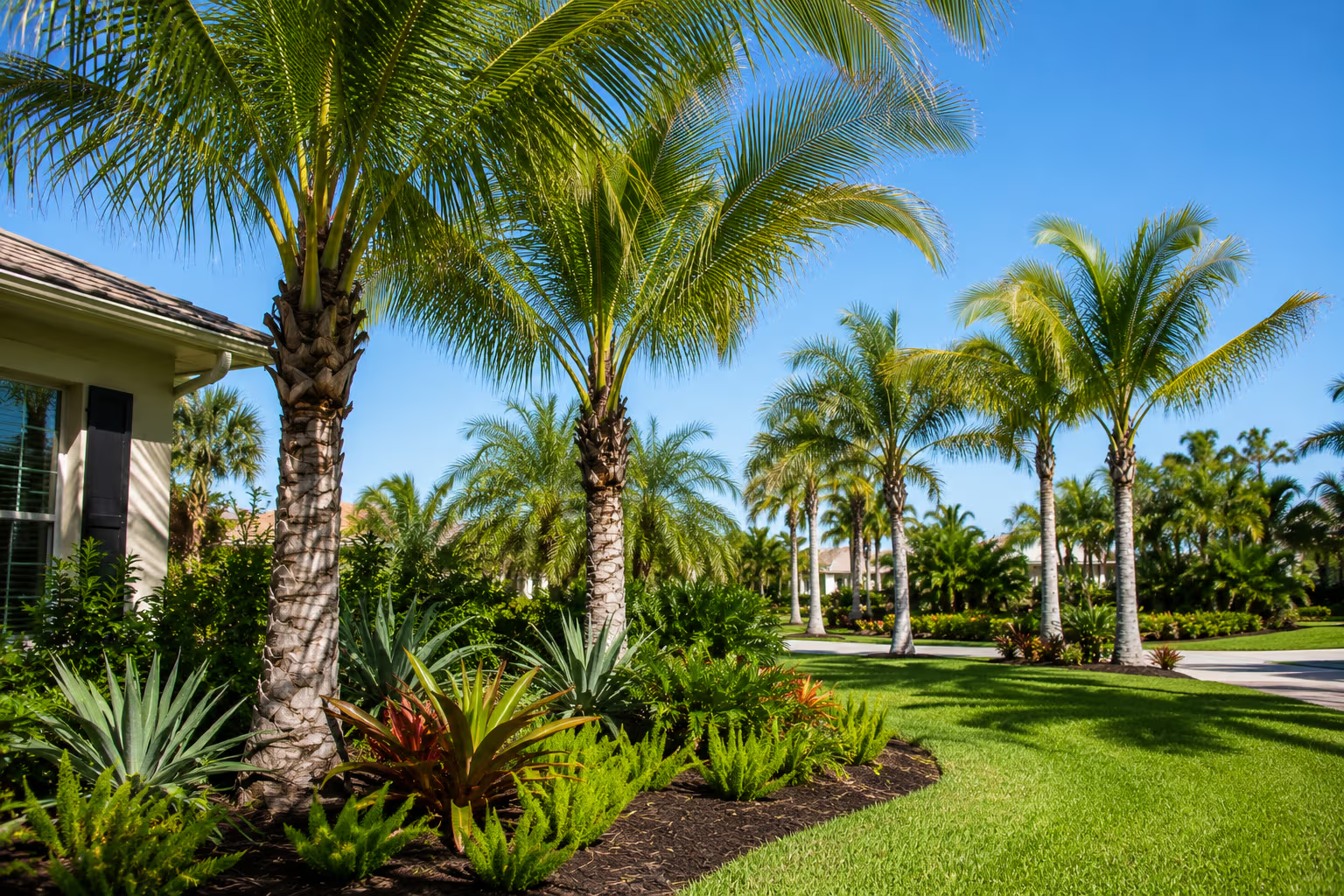
Mature Florida palm tree receiving nutrient treatment
A properly-fed mature palm — bright green fronds, no frizzle top, no yellow tips.
Healthy St. Augustine turf on a St. Johns County property under the annual Unity program
Healthy St. Augustine turf on a St. Johns County property under our annual program.
Our Annual Program

Our Annual Lawn & Palm Program

A full-year cycle timed to North Florida’s climate — pre-emergent in winter, chinch bug prep in spring, fungal prevention in summer, root-feed in fall.

Winter
Jan – Feb

Winter Pre-Emergent

Weed control before spring germination. Winter fertilizer boost for palms to prep for the growing season.

Spring
Mar – May

Spring Green-Up + Chinch Bug Prep

Post-emergent for broadleaf weeds, slow-release nitrogen, first palm feeding, and chinch bug prevention before the summer surge.

Summer
Jun – Aug

Fungal Prevention + Peak-Season Insect Control

Pre-brown-patch fungicide, mid-season palm micronutrient round, sod webworm monitoring, and a second chinch bug application at peak humidity.

Fall
Sep – Nov

Fall Root-Feed + Pre-Winter Cleanup

Recovery fertilizer for stressed turf, the final palm micronutrient round of the year, late-season broadleaf weed control, and dormancy-timing adjustments.

What It Costs

How Much Does Lawn & Palm Care Cost?

Pricing scales with lawn square footage, palm count, and property complexity. All quotes are free and given in writing.
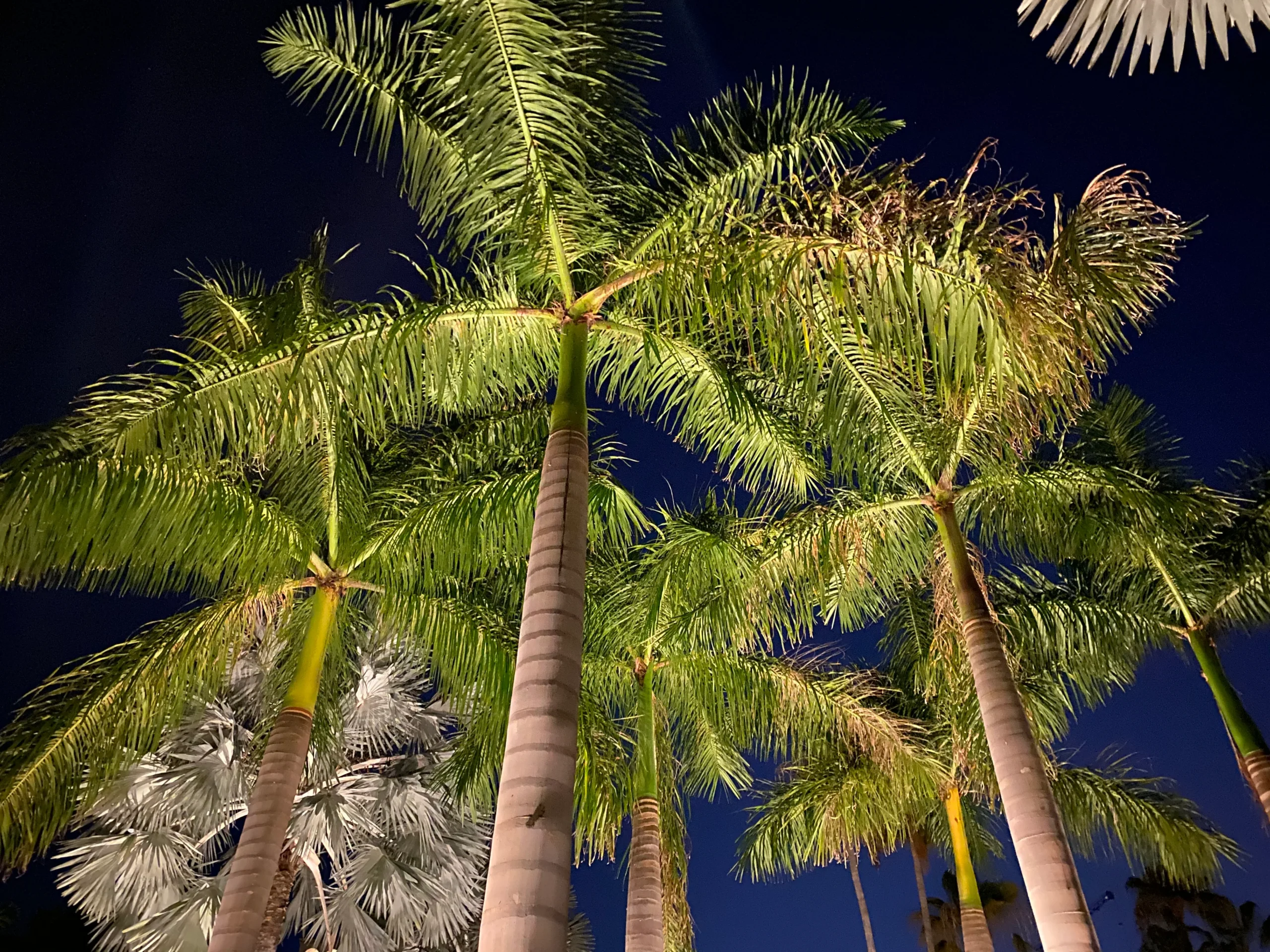
Tall North Florida palm trees against a blue sky
Mature palms like these need micronutrient support 3–4 times per year — the largest line item in most programs.
Starting at $65

Standard Lawn Program

Annual cycle — fertilization, weed control, and pest treatment. Priced per round for typical lots under 8,000 sq ft.

Most Popular
$85 – $140

Lawn + Palm Program

Everything above plus dedicated palm nutrient program (3 rounds/year). Best for homes with 3+ palms.

$180 – $450

Palm-Only Treatment

Just the palms — 3 rounds per year (spring, mid-summer, fall). Priced by palm count and size. Great for HOA-managed lawns.

Service Area

Lawn & Palm Care Across St. Johns & Flagler Counties

St. Augustine

Anastasia Island · Historic Downtown · Shores

Historic downtown Sabal palms with recurring frizzle top. Anastasia Island salt-air pressure on shrubs and hedges. Coastal St. Augustine grass susceptible to sod webworm.

View St. Augustine pest control →

Palm Coast

R-Sections · Grand Haven · Flagler Beach

Palm Coast is literally palm trees — Sabal and Queen palms everywhere, all needing correct fertilization. Chinch bug pressure in R-section lawns near driveways. Brown patch heavy in fall.

View Palm Coast pest control →

St. Johns County

Nocatee · WGV · Ponte Vedra · Silverleaf

Nocatee big-lot suburban lawns need a proper 8-round program. WGV and Ponte Vedra palm plantings showing widespread potassium and magnesium deficiency in mature specimens.

View St. Johns County pest control →
Why Unity

Why Homeowners Choose Unity for Lawns & Palms

Palm Nutrient Specialists

We diagnose frizzle top, potassium, magnesium, and boron deficiencies — most lawn companies miss these entirely.

Annual Program

Cycle tuned specifically for FL climate — pre-emergent, chinch, fungal, fall root-feed.

Kid, Pet & Wildlife Safe

EPA-registered products, licensed application. Yards safe once dry.

Same Owner, All Services

Brandon does your lawn, your pest, your termite, and your wildlife work. One point of contact.

Lawn & Palm FAQs

Frequently Asked Questions

Why is my St. Augustine grass dying in patches?+

In North Florida, the top three culprits are chinch bugs, brown patch fungus, and sod webworms. Chinch bug damage looks like yellow patches near hot spots (driveways, foundations) that spread outward. Brown patch is round dead circles after wet weather. Webworms cause thinning that looks like general grass stress. Correct diagnosis matters — we ID first.

How often should I fertilize my palm trees?+

Three times per year is the sweet spot for North FL palms: spring (March/April), mid-summer (June/July), and fall (September/October). Use a slow-release palm-specific blend (typically 8-2-12 with added Mg and micronutrients). Generic lawn fertilizer will actually hurt palms — different nutrient balance.

Can you fix “frizzle top” on my Sabal palms?+

Yes if it’s caught in time. Frizzle top is manganese deficiency and it’s fatal untreated — but early intervention with manganese sulfate soil drench plus foliar spray usually saves the palm. Advanced cases (crown collapse already visible) sometimes can’t be saved. Call as soon as you see the frizzled new fronds.

What’s the difference between chinch bugs and brown patch?+

Chinch bugs are insects — they cause yellowing patches that spread outward from a central point, usually in sun-heavy areas. Get down on your knees and part the grass; you’ll see tiny black-and-white bugs. Brown patch is fungal — perfect round circles of dead grass, typically after cool wet weather in fall or spring. Different treatments entirely.

Do you handle HOA lawn requirements?+

Yes. We service HOA-covered lawns in Nocatee, Palm Coast R-sections, Grand Haven, and WGV regularly. If your HOA already contracts lawn service but you need supplemental palm care, we can do palm-only treatment on the schedule your HOA doesn’t cover.

When is the best time to start a lawn program?+

Any time — but the fall pre-winter round (October/November) and the winter pre-emergent (January/February) are the two most impactful entry points. Starting in either of those windows means your lawn is already prepped when spring green-up starts. Starting mid-summer is fine too, just a smaller first-year improvement.

Are your treatments safe for my dog to walk on?+

Yes, once dry. Interior applications dry within 60 minutes; lawn and shrub treatments are typically safe for pets to walk on after 1–2 hours. We use EPA-registered products at label rate. Tell Brandon if you have a pet with specific sensitivities and he’ll adjust product selection.

Do you offer one-time treatments or only annual programs?+

Both. Standard lawn programs are annual (best value and best results). But we also do one-time treatments for specific problems: chinch bug spot treatment, sod webworm application, palm frizzle top rescue, or fungal disease control. Priced per visit.

Do you spot-treat individual palms or only whole-property programs?+

Both. Spot-treatment for a single frizzle-topping palm or a lone potassium-deficient specimen is priced by palm size and treatment type. Whole-property palm programs cost less per palm because we’re already on-site.

How long until I see results from a lawn program?+

Green-up from fertilizer application: 7–14 days. Chinch bug knockdown: 3–7 days for the initial die-off. Brown patch fungicide response: 10–21 days for visible edge stabilization. Full lawn recovery from severe damage: one full growing season (6–8 months).

Request Service

Request A FREE Assessment

Yellow patches in the grass? Palm fronds looking off? Send Brandon photos and get a free assessment — no obligation.

(386) 597-3955Call us today Unity Pest ControlSend an email
Our Location

Visit Us in St. Augustine

140 Anguilla Blvd, St. Augustine, FL 32092 · Serving St. Johns & Flagler Counties